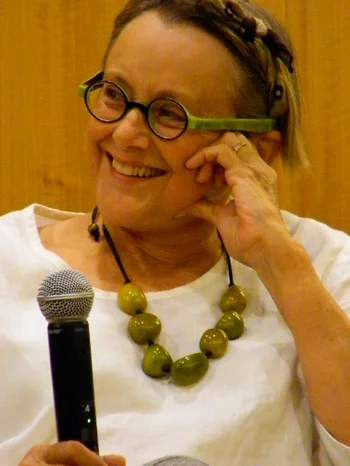
Claudette Werleigh
September 26, 1946 — Haiti
Claudette Werleigh is a Haitian politician who broke new ground in 1995 when she became the first woman to serve as prime minister of Haiti. Her tenure, which lasted into 1996, came during a pivotal period of democratic consolidation following years of military rule and political instability in the country. She went on to build an international reputation as an advocate for human rights, peace, and social justice.
Early Life and Political Formation
Claudette Werleigh was born on September 26, 1946, in Haiti, a country long marked by political upheaval, authoritarian rule, and economic hardship. Like many Haitians of her generation, she came of age under the shadow of the Duvalier dictatorships, an experience that shaped her lifelong commitment to democratic governance and social justice. Werleigh pursued education and professional development that positioned her for public service, and she became active in civic and humanitarian organizations working on issues of poverty, human rights, and grassroots empowerment in Haiti. Her early career included involvement with Caritas Haiti, the Catholic charitable organization, where she gained experience addressing the needs of vulnerable communities. This background in humanitarian work, combined with her growing political engagement, laid the foundation for her eventual entry into national government. As Haiti moved toward restoring democratic institutions after decades of dictatorship and military interference, Werleigh emerged as a trusted figure capable of bridging technical governance with a deep commitment to social welfare, qualities that would soon bring her to the highest levels of the Haitian government.
Rise to the Premiership
Werleigh's political career advanced significantly when she was appointed Haiti's Minister of Foreign Affairs, a role in which she represented the country on the international stage during a delicate period of reconstruction following the return of President Jean-Bertrand Aristide to power in 1994 after a military coup. Her competence and diplomatic skill in this position helped establish her credentials for higher office. In November 1995, she was appointed prime minister of Haiti, becoming the first woman ever to hold that position in the nation's history. She took office during the transition between the Aristide and incoming René Préval administrations, a period requiring careful political management to preserve Haiti's fragile democratic gains. As prime minister, Werleigh worked to stabilize government institutions, promote reconciliation, and address the country's pressing economic and social challenges. Her appointment was widely seen as a milestone for gender representation in Haitian politics, a country where women had historically been excluded from top leadership roles. She served in the position until 1996, when a new government was formed under President Préval, marking the end of her tenure but not the end of her public influence.
Did You Know?
Claudette Werleigh made history in November 1995 as the first woman ever to serve as prime minister of Haiti, a milestone achievement in a nation where women had long been excluded from top political leadership. She later brought her commitment to justice to the global stage as Secretary General of Pax Christi International, a worldwide Catholic peace organization.
Later Career and Legacy
After leaving the premiership, Claudette Werleigh continued her commitment to social justice and human rights on both national and international levels. She became affiliated with Pax Christi International, a global Catholic peace movement, eventually serving as its Secretary General, where she worked on issues including nonviolence, conflict resolution, and advocacy for marginalized populations around the world. She also remained politically active in Haiti, associated with the Konvansyon Inite Demokratik (KID) party, and continued to speak out on issues affecting Haitian democracy and development. Werleigh's legacy endures as a trailblazer who shattered barriers for women in Haitian politics, proving that women could hold the nation's highest executive offices. Her career illustrates the intersection of governance and humanitarian advocacy, reflecting a life dedicated to public service rather than personal political ambition alone. As Haiti continued to grapple with instability in the decades following her premiership, Werleigh remained a respected voice for democratic values, human rights, and the empowerment of women in leadership, leaving a lasting mark on her country's political history.