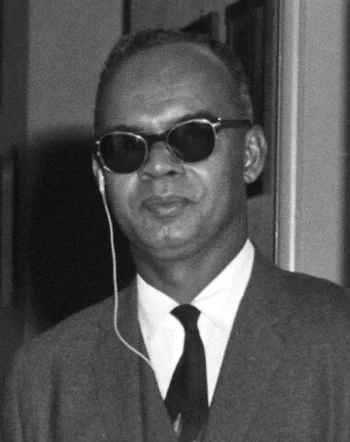
Deendayal Upadhyaya
September 25, 1916 — February 11, 1968 — Nagla Chandrabhan, Mathura, India
Deendayal Upadhyaya was an Indian political philosopher and organizer who shaped the ideology of the Bharatiya Jana Sangh (BJS), the forerunner of today's Bharatiya Janata Party. As the architect of Integral Humanism, he fused cultural nationalism with elements of Gandhian economic thought, leaving a doctrine that continues to influence Indian right-wing politics decades after his death.
Early Life and Education
Deendayal Upadhyaya was born on September 25, 1916, in the village of Nagla Chandrabhan in Mathura district, in what was then the United Provinces of British India. Orphaned at a young age, he was raised by relatives and faced considerable hardship growing up, yet he distinguished himself academically, earning scholarships that carried him through his schooling. He pursued higher education at Birla College in Pilani and later at Sanatan Dharma College in Kanpur, where he studied English literature. During his college years, he came into contact with the Rashtriya Swayamsevak Sangh (RSS), a Hindu nationalist volunteer organization, and its ideas of cultural revival left a lasting impression on him. Rather than pursue a conventional career, he chose to become a full-time RSS worker, or pracharak, dedicating himself to organizational and ideological work. This grounding in RSS training shaped his intellectual outlook and prepared him for the political and journalistic activities that would define the rest of his life.
Political Career and Integral Humanism
In the 1940s, Upadhyaya launched the monthly publication Rashtra Dharma to spread ideas of Hindutva revival, and he went on to found related periodicals including the weekly Panchjanya and the daily Swadesh, using journalism as a vehicle for ideological outreach. In 1951, he helped Syama Prasad Mookerjee establish the Bharatiya Jana Sangh and served as its general secretary for over a decade, becoming the party's chief organizational strategist. His most enduring intellectual contribution came in 1965, when he delivered a series of lectures articulating Integral Humanism, which became the Jana Sangh's official political doctrine. The philosophy sought a distinctly Indian path between capitalism and communism, incorporating cultural-nationalist values alongside Gandhian socialist principles such as sarvodaya (welfare of all) and swadeshi (economic self-reliance). Upadhyaya argued that Indian society should be understood holistically, addressing body, mind, intellect, and soul together, rather than through Western frameworks. In December 1967, his organizational skill was rewarded when he was elected national president of the Bharatiya Jana Sangh, the culmination of his political career.
Did You Know?
Deendayal Upadhyaya was elected national president of the Bharatiya Jana Sangh in December 1967, but he died under mysterious circumstances near the railway tracks at Mughalsarai station just weeks later, in February 1968. The station was later renamed Deen Dayal Upadhyaya Junction in his honor, and the exact cause of his death remains debated by historians.
Death and Legacy
Upadhyaya's presidency proved tragically brief. On February 11, 1968, just weeks after assuming leadership of the Jana Sangh, he was found dead near the railway tracks at Mughalsarai station in Uttar Pradesh under circumstances that remain disputed to this day. His sudden death shocked the party and cut short what many considered a promising national political future. Despite the brevity of his formal leadership, Integral Humanism endured as the guiding ideology of the Bharatiya Jana Sangh and was later adopted by the Bharatiya Janata Party after its formation in 1980. Upadhyaya has since been honored extensively in Indian public life: Mughalsarai railway station was renamed Deen Dayal Upadhyaya Junction in his memory, and numerous government welfare schemes, including rural electrification and skill-development programs, bear his name. His birth anniversary is commemorated annually by BJP leaders and affiliated organizations as a moment to reaffirm his philosophical legacy. Today, he is remembered less as a conventional politician and more as an ideologue whose synthesis of tradition and social welfare continues to inform debates within Indian conservative and nationalist politics.