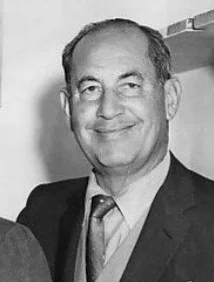
Gilbert N. Lewis
October 23, 1875 — March 23, 1946 — Weymouth, Massachusetts, United States
Gilbert N. Lewis was an American physical chemist whose ideas about chemical bonding still shape how students learn chemistry today. As dean of the College of Chemistry at the University of California, Berkeley, he transformed the school into a world-class research center while producing landmark work on valence theory, thermodynamics, and acid-base chemistry. His introduction of the term 'photon' in 1926 also left a lasting mark on physics.
Early Life and Education
Gilbert Newton Lewis was born on October 23, 1875, in Weymouth, Massachusetts, to a family that valued education and independent thinking. He was largely taught at home in his early years before entering the University of Nebraska and later transferring to Harvard University, where he earned his bachelor's degree, master's degree, and Ph.D. in chemistry by 1899. After completing his doctorate, Lewis briefly taught at Harvard, then spent time studying abroad in Germany with influential physical chemists Wilhelm Ostwald and Walther Nernst, experiences that sharpened his interest in thermodynamics and the physical underpinnings of chemical behavior. He returned to the United States to work at the Massachusetts Institute of Technology, where he began developing the rigorous quantitative approach to chemistry that would define his career. These formative years combined theoretical training with hands-on experimental skill, setting the stage for the sweeping contributions he would later make to both chemistry and physics.
Career and Major Contributions
In 1912, Lewis moved to the University of California, Berkeley, where he became dean of the College of Chemistry and built it into one of the leading chemistry programs in the world. In 1916, he published his groundbreaking theory of the covalent bond, introducing what became known as Lewis dot structures to depict shared electron pairs between atoms—a visual and conceptual tool still taught in classrooms today. In 1923, with collaborator Merle Randall, he published 'Thermodynamics and the Free Energy of Chemical Substances,' a foundational text that helped standardize the field of chemical thermodynamics. That same year, he proposed his broader definition of acids and bases, describing acids as electron-pair acceptors and bases as electron-pair donors, a framework now known as Lewis acid-base theory. In 1926, Lewis coined the term 'photon' for the smallest discrete unit of radiant energy, a word that became permanently embedded in the vocabulary of physics. He also pursued pioneering research in isotope separation, successfully producing pure heavy water, and explored questions in relativity and early quantum theory throughout his prolific career.
Did You Know?
Gilbert Lewis coined the word 'photon' in 1926 to describe a fundamental unit of light, a term now used universally in physics—yet despite this and his equally famous covalent bond theory, he was nominated for the Nobel Prize more than 30 times and never won.
Later Life and Legacy
Despite being nominated for the Nobel Prize in Chemistry numerous times, Lewis never received the honor, a fact that has long puzzled historians of science given the scale of his influence. He continued active research at Berkeley into his seventies, mentoring generations of chemists and maintaining a demanding, rigorous laboratory culture. On March 23, 1946, Lewis was found dead in his Berkeley laboratory, where he had been working with liquid hydrogen cyanide; the circumstances of his death, occurring shortly after a tense lunch with fellow scientist Irving Langmuir, have fueled speculation that it may have been suicide, though this was never definitively established. Lewis's legacy endures through the electron-dot structures bearing his name, his acid-base theory, and his lasting imprint on the vocabulary and conceptual foundations of modern chemistry and physics. His work bridging chemistry and physics helped usher in the modern understanding of molecular bonding and radiant energy.