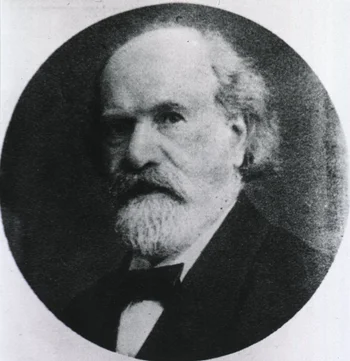
Sir Hans Heysen
October 8, 1877 — July 2, 1968 — Hamburg, Germany
Sir Hans Heysen was an Australian artist celebrated for his masterful depictions of the Australian landscape, particularly the majestic eucalyptus gum tree. Born in Germany and raised in South Australia, he became one of the nation's most beloved painters, capturing the light, scale, and character of the bush with unmatched sensitivity. His work helped shape a distinctly Australian visual identity in early twentieth-century art.
Early Life and Emigration
Hans Heysen was born on October 8, 1877, in Hamburg, Germany. In 1884, when he was seven years old, his family emigrated to Adelaide, South Australia, seeking new opportunities. Growing up in the colony, young Hans developed an early fascination with drawing and the natural world around him, and his talent quickly attracted the attention of local mentors and patrons. Recognizing his promise, a group of Adelaide businessmen sponsored his formal art education, enabling him to travel to Europe in 1899. He studied in Paris at the Académie Julian and also spent time in Italy, absorbing the techniques of the old masters and contemporary European painters. During these formative years abroad, Heysen honed his skills in composition, tonal values, and the handling of light, all of which would later define his signature style. He returned to South Australia in 1903, bringing with him a refined technical foundation that he would apply to distinctly Australian subject matter, setting the stage for a career devoted to portraying the landscapes of his adopted homeland.
Career and Major Works
After returning to Australia, Heysen settled in the town of Hahndorf in the Adelaide Hills, at a property he named 'The Cedars,' which became both his home and studio for the rest of his life. He is best remembered for his powerful, luminous paintings of gum trees, rendered with such structural grandeur that they seemed almost monumental, reshaping how Australians viewed their native flora. His technical command of watercolor was especially celebrated, a medium he elevated to rival oil painting in scale and ambition. Heysen won the prestigious Wynne Prize for landscape painting a remarkable nine times between 1904 and 1932, a record that underscored his dominance in Australian art circles. In the 1920s, he began making extended trips to the Flinders Ranges in South Australia's outback, where the rugged, sunburned terrain inspired a dramatic new phase in his work, capturing the vastness and stark beauty of the arid interior. His paintings, widely reproduced and exhibited, helped forge a national artistic identity rooted in the unique character of the Australian bush and outback landscapes.
Did You Know?
Hans Heysen won the Wynne Prize for landscape painting a record nine times, a feat that remains unmatched in the award's history. His daughter Nora Heysen also became a celebrated painter, making history in 1938 as the first woman to win the Archibald Prize.
Later Life and Legacy
Heysen continued painting prolifically into his later years, remaining based at The Cedars, which he and his family maintained as a working studio and garden estate. In 1959, in recognition of his profound contribution to Australian art, he was knighted, becoming Sir Hans Heysen. He was also a devoted mentor and family man; his daughter, Nora Heysen, followed him into painting and made history in 1938 as the first woman to win the Archibald Prize, Australia's top portraiture award. Hans Heysen died on July 2, 1968, at The Cedars in Hahndorf, South Australia, having lived to see his work embraced as a cornerstone of the nation's cultural heritage. Today, The Cedars is preserved as a historic house museum and gallery, open to the public and showcasing his life's work alongside pieces by Nora. His paintings hang in major Australian galleries, and his legacy endures as one of the country's foremost interpreters of the natural landscape, an artist who taught generations of Australians to see beauty and grandeur in their own gum trees and rugged interior.