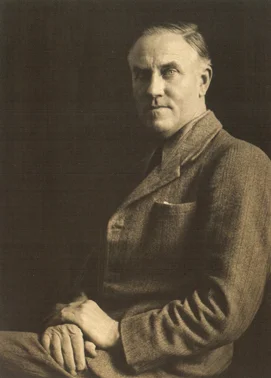
Salomon Kalischer
October 8, 1845 — 1924 — Germany
Salomon Kalischer was a German Jewish physicist, pianist, and composer whose career uniquely spanned the worlds of experimental science and classical music. Born in 1845, he pursued rigorous training in physics while simultaneously cultivating serious musical talents as a performer and composer. His dual legacy reflects the intellectual richness of 19th-century German-Jewish cultural life, in which scientific inquiry and artistic expression often intertwined.
Early Life and Education
Salomon Kalischer was born on October 8, 1845, into a German Jewish family during a period of significant scientific and cultural ferment in Prussia. From an early age, he displayed a dual aptitude for both music and the natural sciences, a combination that would define his unusual career path. Rather than choosing one discipline over the other, Kalischer pursued formal education in physics while also receiving thorough training as a pianist. This period of German intellectual history saw many educated Jewish families place high value on both scientific rigor and cultural refinement, and Kalischer's upbringing appears to have encouraged both pursuits without conflict. His academic studies in physics eventually led him toward university-level research and teaching, while his musical training prepared him for a parallel life as a performer and composer. The Berlin of his youth was a vibrant center for both scientific advancement, with figures like Hermann von Helmholtz reshaping the study of acoustics and perception, and for classical music performance, creating an environment perfectly suited to nurturing Kalischer's twin talents.
Dual Career in Physics and Music
As an adult, Kalischer established himself professionally in physics, contributing to scientific scholarship while maintaining an active presence in Germany's musical life. His scientific work situated him among physicists exploring topics that often intersected with acoustics and the physical basis of sound, a natural bridge between his two fields of expertise. Simultaneously, he built a reputation as a skilled pianist, performing publicly and privately within Berlin's cultured social circles. As a composer, Kalischer produced musical works that reflected the Romantic sensibilities of his era, drawing on his deep technical understanding of sound and harmony. This rare combination of physicist and composer allowed him to approach music with an analytical perspective uncommon among his artistic contemporaries, while his musical sensibilities may have informed his scientific interests in acoustics and sound. Kalischer moved between these disciplines throughout his working life, publishing and performing in ways that distinguished him from peers who specialized in only one field. His career stands as an example of the polymath tradition still respected in 19th-century German academic and cultural circles.
Did You Know?
Salomon Kalischer managed to sustain two demanding professional identities simultaneously — as a trained physicist and as an accomplished pianist and composer — a combination rarely achieved with equal seriousness in either field during his era.
Later Years and Legacy
Kalischer continued his work in both physics and music into the early 20th century, remaining active until his death in 1924. He lived through a transformative period in German history, witnessing the unification of Germany, the flourishing of Wilhelmine culture, and the upheaval of the First World War before his passing. His legacy endures primarily as an example of interdisciplinary achievement, demonstrating that scientific and artistic pursuits could be deeply complementary rather than mutually exclusive. Though not as widely remembered today as some of his scientific or musical contemporaries, Kalischer's life illustrates the intellectual breadth possible within the German Jewish cultural milieu of his time, a community that produced numerous figures who moved fluidly between scholarship, science, and the arts. His contributions, though modest in comparison to towering figures like Helmholtz in physics or the great Romantic composers in music, reflect a life dedicated to bridging two demanding disciplines. Kalischer's story remains a point of interest for historians examining the overlap between scientific and artistic culture in 19th-century Europe.