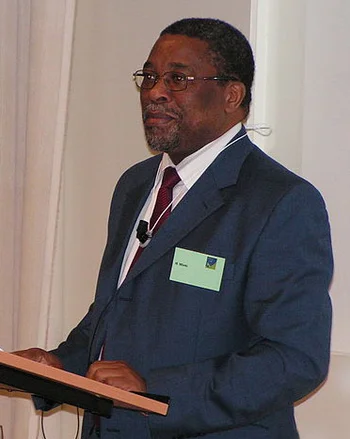
Ingvar Carlsson
November 9, 1934 — Borås, Sweden
Ingvar Carlsson is a Swedish politician who twice served as Prime Minister of Sweden, first from 1986 to 1991 and again from 1994 to 1996. He assumed the nation's highest office under extraordinary circumstances, following the assassination of his predecessor Olof Palme, and went on to lead Sweden through a severe economic crisis and into membership of the European Union. As leader of the Swedish Social Democratic Party for a decade, he left a lasting mark on modern Swedish governance.
Early Life and Political Rise
Gösta Ingvar Carlsson was born on November 9, 1934, in Borås, Sweden, into a working-class family. He studied economics and political science at Lund University, where his intellectual talents and organizational skills quickly drew attention within Social Democratic youth circles. Carlsson became active in the Swedish Social Democratic Party at a young age, rising through its youth wing before entering national politics. He was elected to the Riksdag, Sweden's parliament, in 1964, beginning a long career of public service. Over the following two decades, he held several important cabinet positions, including Minister of Education and Minister of the Environment, gaining a reputation as a capable administrator and consensus builder. His steady rise through the party hierarchy positioned him as a trusted figure among Sweden's political establishment, and by the mid-1980s he had become Deputy Prime Minister under Olof Palme, placing him at the center of the country's governing coalition and setting the stage for the dramatic turn his career would soon take.
Prime Minister and Leader Through Crisis
Carlsson's first term as Prime Minister began abruptly in 1986, when Olof Palme was assassinated in Stockholm, thrusting Carlsson into national leadership during a moment of shock and uncertainty. He also became leader of the Social Democratic Party that year, a position he would hold until 1996. During his initial term, which lasted until 1991, he worked to stabilize the country and maintain continuity in Swedish social policy. He returned to the premiership in 1994 after his party's electoral victory, taking charge during one of the most severe economic downturns in Sweden's modern history, marked by high unemployment, a banking crisis, and mounting public debt. Carlsson's government implemented significant fiscal reforms to restore economic stability. Perhaps his most historically significant achievement came in this second term: he led Sweden into the European Union, a move formalized when the country joined in January 1995 following a national referendum. This decision marked a profound shift in Swedish foreign and economic policy, ending the nation's long tradition of nonalignment-oriented isolation from European political integration.
Did You Know?
Ingvar Carlsson became Prime Minister of Sweden under tragic and unprecedented circumstances: he took office just days after the assassination of his predecessor, Olof Palme, in 1986. Despite the shocking transition, he went on to lead the country for a decade and guided it into the European Union in 1995.
Later Life and Legacy
Ingvar Carlsson stepped down as Prime Minister and party leader in 1996, handing power to his successor, Göran Persson, and retiring from the front lines of Swedish politics. In his later years, he remained a respected elder statesman, occasionally offering public commentary on Swedish and international affairs. He also served on international commissions, including work related to United Nations reform, drawing on his experience navigating complex political transitions. Carlsson's legacy rests on his steady, pragmatic leadership during two of the most turbulent periods in modern Swedish history: the aftermath of a political assassination and a deep economic recession. His decision to guide Sweden into the European Union remains one of the most consequential foreign policy shifts in the country's postwar history, reshaping its economic and political relationships for decades to come. Widely regarded as a calm, principled leader who prioritized social cohesion and institutional stability, Carlsson is remembered as a figure who helped steer Sweden safely through crisis while modernizing its place within Europe.