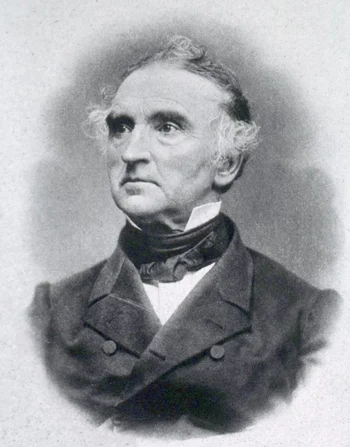
Henri-Dominique Lacordaire
May 12, 1802 — November 21, 1861 — Recey-sur-Ource, France
Jean-Baptiste Henri-Dominique Lacordaire was a French Catholic priest, journalist, theologian, and political activist who reshaped religious life in nineteenth-century France. Renowned as the greatest pulpit orator of his age, he drew immense crowds to Notre-Dame Cathedral with his sermons. He is best remembered for re-establishing the Dominican Order in France following its suppression during the French Revolution.
Early Life and Formation
Henri Lacordaire was born on May 12, 1802, in Recey-sur-Ource, France, into a family that had lost his father at a young age, leaving his mother to raise him with strong religious devotion despite the anti-clerical currents of the post-Revolutionary era. As a young man, Lacordaire drifted from faith and pursued legal studies in Dijon and Paris, becoming a lawyer and even flirting with skepticism common among educated Frenchmen of his generation. However, a profound spiritual crisis led him back to Catholicism, and in 1824 he entered the seminary of Saint-Sulpice in Paris, abandoning his legal career for the priesthood. Ordained in 1827, Lacordaire initially struggled to find his calling within the institutional Church, feeling constrained by its cautious, monarchist alliances. His intellectual restlessness and passion for reconciling Catholicism with modern liberty set the stage for his later collaboration with the influential priest Félicité de Lamennais, alongside whom he would help found the newspaper L'Avenir, a bold venture advocating for the separation of church and state and greater religious freedom.
Pulpit Orator and Restorer of the Dominicans
Lacordaire's fame rests chiefly on his extraordinary skill as a preacher. Beginning in 1835, he delivered a series of Lenten conferences at Notre-Dame Cathedral in Paris that captivated enormous audiences, blending eloquent rhetoric, philosophical depth, and passionate conviction. These sermons, later published, established him as the preeminent Catholic orator of the nineteenth century, credited with reviving public interest in religious discourse among France's educated classes. Beyond preaching, Lacordaire pursued his deeper ambition: restoring the Dominican Order, which had been dissolved during the Revolution. He traveled to Rome, took the Dominican habit in 1839, and worked tirelessly to reestablish the order's presence in France, founding new houses and reviving its traditions of scholarship and preaching. He also briefly engaged in politics, serving in the National Assembly during the Second Republic in 1848, where he advocated for a Christian-inspired democracy, though he soon withdrew from active political life. Throughout, he remained committed to demonstrating that Catholic faith and modern liberal ideals could coexist.
Did You Know?
Lacordaire's Notre-Dame sermons were so popular that people lined up for hours to secure a seat, and his conferences are credited with sparking a religious revival among Paris's intellectual elite. He was also elected to the prestigious Académie Française, taking the seat previously held by the political philosopher Alexis de Tocqueville.
Later Years and Enduring Legacy
In his later years, Lacordaire served as the head of the restored Dominican Province of France and directed the Collège Sorèze, an educational institution where he applied his ideas about integrating faith, intellect, and moral formation. He was elected to the Académie Française in 1860, a testament to his stature as both a religious figure and a man of letters, occupying a seat once held by Alexis de Tocqueville. Lacordaire died on November 21, 1861, in Sorèze, France, leaving behind a legacy as one of the most influential Catholic voices of his century. His efforts to reconcile the Church with modern liberal democracy influenced later generations of Catholic social thought, and his successful revival of the Dominican Order ensured the continuation of a religious tradition that had nearly been extinguished. Today, Lacordaire is remembered both for his rhetorical brilliance and for his courage in pushing the Church toward engagement with the modern world, making him a pivotal figure in the history of French Catholicism.