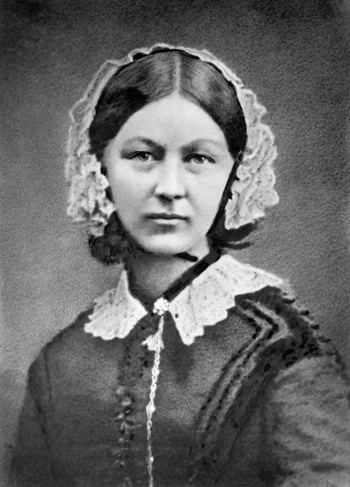
Justus von Liebig
May 12, 1803 — April 18, 1873 — Germany
Justus von Liebig was a German chemist whose discoveries in organic chemistry and soil science revolutionized agriculture and helped feed the world's expanding industrial populations. He essentially founded the discipline of biochemistry, established one of the first hands-on chemistry teaching laboratories in history, and trained a generation of scientists who dominated the field for decades.
Reinventing Chemical Education
Born on May 12, 1803 in Darmstadt, Leibig apprenticed in a pharmacy and pursued chemistry with obsessive drive. At only twenty-one, he was appointed professor of chemistry at the University of Giessen — largely through the influence of the physicist Alexander von Humboldt. There he created a practical laboratory course modeled on hands-on experiment rather than lecture demonstration. Students from across Europe and America came to train under him. The "Liebig model" of research-led chemical education transformed universities worldwide and remains the basis of modern laboratory education.
The Law of the Minimum
Liebig's most consequential contribution to human welfare was his work on plant nutrition. He demonstrated that plants feed on inorganic minerals from soil and air rather than organic matter, overturning the humus theory that had dominated agriculture for centuries. He formulated what became known as Liebig's Law of the Minimum: plant growth is limited by the scarcest essential nutrient, not the most abundant one. This principle underpins modern fertilizer science. His subsequent invention of nitrogen-based artificial fertilizers — though his initial commercial formulations were flawed — pointed the way to the industrial agriculture that would sustain the world's twentieth-century population explosion. He also invented a process for producing meat extract that became the basis of commercial products like Bovril.
Did You Know?
Liebig designed a piece of glassware still used in chemistry labs worldwide. The "Liebig condenser" — a glass tube within a glass tube through which cold water flows to condense vapors — is so standard that it is simply called a condenser in most laboratories, with his name largely forgotten by the students who use it daily.
Legacy
Liebig moved to Munich in 1852, was ennobled as a baron, and continued productive work until his death on April 18, 1873. He is remembered as one of the greatest chemists of the nineteenth century and specifically as a founding figure of biochemistry and agricultural chemistry. The nitrogen-based fertilizer industry he helped inspire now sustains more than half of the world's food supply. His laboratory model is the direct ancestor of every university chemistry department in the world.