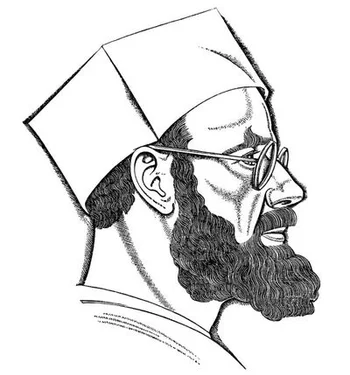
Johann Nikolaus Forkel
February 22, 1749 — March 20, 1818 — Meeder, Germany
Johann Nikolaus Forkel was a German musicologist and music theorist widely regarded as one of the founders of modern musicology. His sweeping historical surveys and bibliographic works helped establish the systematic study of music as an academic discipline. He is perhaps best remembered for writing the first substantial biography of Johann Sebastian Bach, a work that shaped the composer's posthumous reputation for generations.
Early Life and Education
Johann Nikolaus Forkel was born on February 22, 1749, in Meeder, a small town near Coburg in what is now Germany. Showing early musical talent, he received training as a chorister and organist before pursuing broader academic studies. He eventually made his way to the University of Göttingen, where he initially enrolled to study law but was quickly drawn into the vibrant intellectual and musical life of the university town. Göttingen, with its growing reputation as a center of Enlightenment scholarship, provided fertile ground for Forkel's emerging interests in combining rigorous historical method with the study of music. He soon abandoned formal legal studies to devote himself fully to music, distinguishing himself as both a practicing musician and a scholar. This dual identity—performer and researcher—would define his career, as he sought to apply the same critical, source-based approach used in other academic disciplines to the largely uncharted field of music history.
Career and Major Works
Forkel spent most of his career at the University of Göttingen, where he served as university music director and organist while building a reputation as a scholar of extraordinary ambition. His most significant achievement was the two-volume Allgemeine Geschichte der Musik (General History of Music), among the earliest serious attempts to chronicle the history of Western music from antiquity onward. Complementing this, he produced the Allgemeine Litteratur der Musik, a groundbreaking bibliography that catalogued and organized musical literature, laying essential groundwork for future musicological research. In 1802, Forkel published Johann Sebastian Bach: His Life, Art, and Work, the first substantial biographical and critical study of Bach. Drawing on information supplied by Bach's surviving sons, particularly Carl Philipp Emanuel Bach, Forkel's biography played a crucial role in reviving and cementing Bach's reputation at a time when the composer's music had fallen into relative obscurity outside specialist circles.
Did You Know?
Forkel's 1802 biography of Johann Sebastian Bach was based largely on firsthand recollections and materials supplied by Bach's own sons, making it an invaluable primary source—yet it also helped spread some inaccuracies about Bach's life that scholars only later corrected.
Legacy and Influence
Johann Nikolaus Forkel died on March 20, 1818, in Göttingen, leaving behind a body of work that fundamentally shaped how music history would be studied and written. His Bach biography became a foundational text for the nineteenth-century Bach revival, influencing composers and scholars including Felix Mendelssohn, whose famous 1829 performance of the St Matthew Passion helped restore Bach to prominence. Forkel's methodological insistence on tracing music's development through documented historical evidence, rather than anecdote alone, established a template for musicology as a rigorous academic field. Later scholars built directly on his bibliographic and historical frameworks, and his work remains a touchstone for historians examining how Bach's legacy was constructed and transmitted after the composer's death. Though some of his historical judgments have since been revised or corrected, Forkel's role as a pioneering systematizer of musical knowledge secures his place as one of the discipline's founding figures.