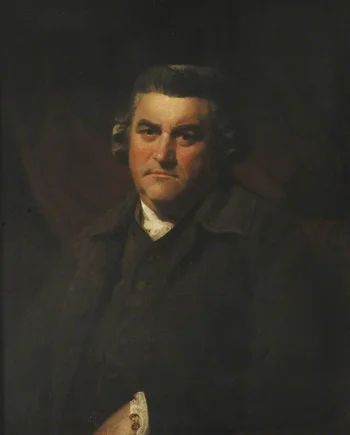
John B. Watson
January 9, 1878 — September 25, 1958 — Travelers Rest, South Carolina, United States
John B. Watson was an American psychologist who founded behaviorism, a school of thought that redefined psychology as the objective study of observable behavior rather than introspection or consciousness. His 1913 lecture at Columbia University, "Psychology as the Behaviorist Views It," is often called the movement's manifesto. Watson's influence extended beyond academia into child-rearing advice and the advertising industry, cementing his legacy as one of the most consequential and controversial figures in 20th-century psychology.
Early Life and Education
John Broadus Watson was born in 1878 in Greenville County, South Carolina, into a poor rural family. His childhood was marked by instability, including a strict religious mother and a father who abandoned the family, experiences that some biographers link to Watson's later rejection of introspective, emotion-based psychology. Despite a troubled youth that included brushes with delinquency, Watson proved academically talented and enrolled at Furman University at age sixteen, earning a master's degree by twenty-one. He went on to study at the University of Chicago, where he worked under influential figures including philosopher John Dewey and psychologist James Rowland Angell. There, Watson focused on animal behavior and comparative psychology, completing his PhD in 1903. This early training in observing and measuring animal responses to stimuli, rather than relying on self-reported feelings, laid the intellectual groundwork for the behaviorist philosophy he would later champion.
Founding Behaviorism
Watson joined Johns Hopkins University in 1908 and quickly rose to prominence within American psychology, serving as editor of Psychological Review from 1910 to 1915. His landmark 1913 address, "Psychology as the Behaviorist Views It," argued that psychology should abandon the study of consciousness and instead focus exclusively on observable, measurable behavior—a manifesto that became known as the "Behaviorist Manifesto." Watson conducted extensive research on animal behavior, applying his stimulus-response framework to understand learning and conditioning. His most notorious work was the 1920 "Little Albert" experiment, in which he and colleague Rosalie Rayner conditioned a young child to fear a white rat by pairing it with a loud, frightening noise, demonstrating that emotional responses could be learned. He also conducted the "Kerplunk" experiment studying infant reflexes. Watson's insistence that behavior alone, not inner mental states, should be psychology's subject matter fundamentally reshaped the discipline and influenced generations of researchers, including B.F. Skinner's later work in radical behaviorism.
Did You Know?
Before his death, Watson reportedly burned most of his personal papers and correspondence, deliberately destroying much of the historical record of his private life and thoughts, leaving biographers to reconstruct his story largely from published works and secondhand accounts.
Later Career and Legacy
Watson's academic career ended abruptly in 1920 when Johns Hopkins forced his resignation following a scandal involving his affair with Rosalie Rayner, whom he later married. Barred from university life, Watson reinvented himself in the advertising industry, joining J. Walter Thompson, where he applied behaviorist principles to consumer psychology, pioneering techniques like emotional appeals and celebrity endorsements that remain foundational to modern advertising. He also wrote influential and controversial books on child-rearing, notably Psychological Care of Infant and Child (1928), which advocated strict, unemotional parenting to avoid conditioning children into dependency—advice later widely criticized. Watson died on September 25, 1958, in Connecticut. A 2002 Review of General Psychology survey ranked him the 17th most cited psychologist of the 20th century, reflecting his enduring impact. Though his methods, especially the Little Albert experiment, are now viewed as ethically problematic, Watson's insistence on objective, measurable science permanently transformed psychology's methodology and vocabulary.