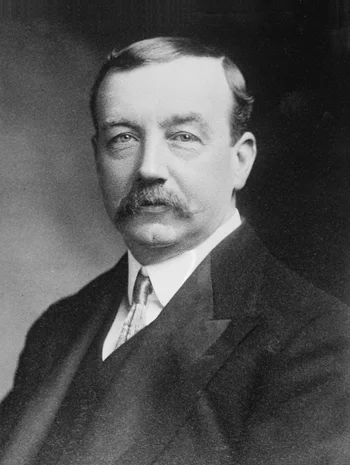
John M. Palmer
September 13, 1817 — September 25, 1900 — Scott County, Kentucky, United States
John McAuley Palmer was an American politician and soldier who rose from a self-taught frontier lawyer to become the 15th governor of Illinois and a Union general during the Civil War. Later in life, he capped his long political career with a run for the presidency in 1896 as the candidate of the National Democratic Party, campaigning to defend the gold standard against the free-silver movement. His life traced the arc of 19th-century American politics, from the antebellum Democratic Party through the Republican coalition and back to a splinter Democratic faction.
Early Life and Legal Career
John McAuley Palmer was born in 1817 in Scott County, Kentucky, into a family of modest means that later moved to Illinois. He received little formal education, attending Alton College only briefly, and largely educated himself through reading and observation. Palmer studied law by apprenticing with local attorneys, a common path for ambitious young men on the frontier, and was admitted to the bar in the 1830s. He settled in Carlinville, Illinois, where he built a successful legal practice and quickly became active in local Democratic politics. Palmer's sharp intellect and persuasive courtroom manner earned him respect throughout central Illinois, and he soon sought elective office. He served in various local and state positions, including as a county judge and delegate to state conventions, steadily building the reputation and connections that would carry him into statewide prominence. His early career reflected the strong Democratic loyalties of downstate Illinois, though the sectional crisis over slavery would soon test and ultimately break those political allegiances, pushing him toward the emerging Republican Party by the late 1850s.
Civil War Service and the Governorship
When the Civil War erupted in 1861, Palmer abandoned his Democratic affiliation over the issue of slavery and secession, helping organize Illinois troops for the Union cause. He was commissioned colonel of the 14th Illinois Infantry and rose rapidly through the ranks, eventually becoming a major general of volunteers. Palmer commanded troops in significant engagements including the Battles of Stones River and Chickamauga, and later led the Department of Kentucky, demonstrating both battlefield competence and administrative skill. After the war, Illinois Republicans nominated Palmer for governor, and he won election in 1868, serving as the state's 15th governor from 1869 to 1873. As governor, he championed reforms including efforts to limit corporate and railroad power, and he clashed with federal authorities over the use of federal troops during Reconstruction-era disturbances, arguing for stronger state sovereignty. His term reflected the tensions many former Democrats felt within the Republican Party, and by the mid-1870s Palmer had drifted back toward his original party as Reconstruction politics shifted.
Did You Know?
In 1896, at nearly 79 years old, John M. Palmer ran for president alongside a running mate, Simon Bolivar Buckner, who had been a Confederate general—meaning a former Union general and former Confederate general shared the same presidential ticket just three decades after the Civil War ended.
Later Career and the 1896 Presidential Campaign
Palmer returned to the Democratic Party in the years following his governorship and remained politically active into old age. Illinois voters sent him to the U.S. Senate, where he served one term from 1891 to 1897, continuing to advocate for limited government and sound fiscal policy. His defining late-career moment came in 1896, when the Democratic Party nominated William Jennings Bryan on a pro-silver platform that alarmed conservative, gold-standard Democrats. Palmer, then nearly 79 years old, agreed to lead a breakaway faction called the National Democratic Party, accepting its presidential nomination alongside running mate Simon Bolivar Buckner, a former Confederate general. The ticket, sometimes called the "Gold Democrats," won only a small share of the popular vote but was seen as helping deny Bryan a decisive victory in several close states. Palmer died in Springfield, Illinois, on September 25, 1900, closing out a remarkable career that spanned frontier law, Civil War command, governorship, and national politics across nearly seven decades of American history.