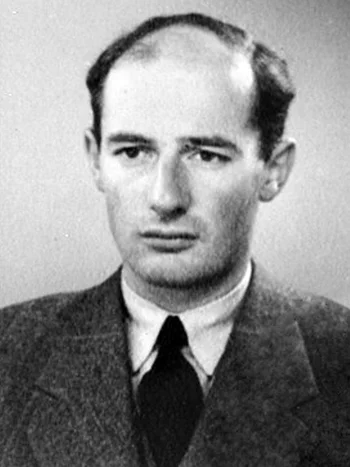
John Riggins
August 4, 1949 — Seneca, Kansas, United States
John Riggins was a powerful, workhorse running back who starred in the National Football League for the New York Jets and Washington Redskins during the 1970s and 1980s. Nicknamed "Riggo" and "the Diesel," he became one of the sport's most memorable postseason performers, capping his career with a legendary Super Bowl XVII MVP performance. Riggins was inducted into the Pro Football Hall of Fame in 1992.
Early Life and College Career
Robert John Riggins was born on August 4, 1949, in Seneca, Kansas, and grew up in a rural Kansas community where football quickly became his outlet for a large, physical frame paired with surprising speed. He attended the University of Kansas, where he starred as a fullback for the Jayhawks and developed the punishing, downhill running style that would define his professional career. At Kansas, Riggins earned All-American recognition and set school rushing records, showcasing an unusual combination of size and burst that made him a rare talent among college backs of his era. His college performances caught the attention of NFL scouts, who saw in him the makings of a featured, every-down back capable of carrying an offense. The New York Jets selected Riggins with the sixth overall pick in the 1971 NFL Draft, recognizing his potential to anchor their running game. His time at Kansas laid the foundation for a professional career defined by durability, power, and an ability to wear down defenses over the course of a game—or a season.
Professional Career with the Jets and Redskins
Riggins spent his first five NFL seasons with the New York Jets from 1971 to 1975, establishing himself as a dependable, hard-nosed rusher despite playing on generally struggling teams. In 1976, he signed with the Washington Redskins, where he would forge his legacy. After a contract dispute led him to sit out the entire 1980 season, Riggins returned in 1981 and delivered the most spectacular stretch of his career. His signature moment came in Super Bowl XVII following the 1982 season, when he broke a crucial fourth-down tackle and rumbled 43 yards for a go-ahead touchdown against the Miami Dolphins, a play that became known as "Riggo's Run." That performance, in which he rushed for a Super Bowl-record 166 yards, earned him the game's Most Valuable Player award and helped deliver Washington its first Super Bowl title. The following season, in 1983, Riggins set what was then an NFL record with 24 rushing touchdowns, cementing his reputation as a premier power back well into his thirties. He retired after the 1985 season with 11,352 career rushing yards and 104 total touchdowns.
Did You Know?
During Super Bowl XVII, John Riggins broke through a fourth-down tackle attempt by Miami's Don McNeal and sprinted 43 yards for the winning touchdown—a play so iconic it's simply known as 'Riggo's Run.' He finished that game with 166 rushing yards, a Super Bowl record at the time, and earned MVP honors.
Legacy and Later Life
Riggins was known as much for his outsized personality as for his punishing running style, often appearing in fur coats, sporting a mohawk, and delivering memorably blunt remarks—including his famously irreverent comment to Supreme Court Justice Sandra Day O'Connor at a 1985 Washington dinner, urging her to "loosen up." On the field, his "bell cow" approach—absorbing heavy workloads and gaining strength as games wore on—influenced how teams valued feature backs capable of shouldering a full season's rushing load. In 1992, Riggins was inducted into the Pro Football Hall of Fame, a recognition of both his statistical accomplishments and his singular postseason heroics. After football, he pursued broadcasting, acting, and radio work, remaining a visible and quotable figure in Washington sports culture for decades. His number 44 became synonymous with Redskins football history, and his Super Bowl XVII run remains one of the most replayed moments in NFL championship lore. Riggins's blend of power, endurance, and flair left a lasting imprint on the running back position and on the folklore of professional football.