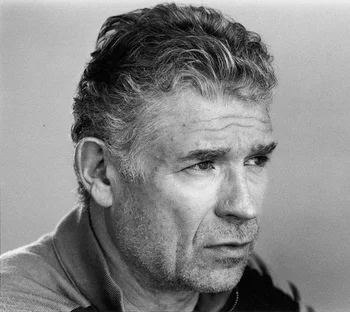
Raoul Wallenberg
August 4, 1912 — Lidingö, Sweden
Raoul Wallenberg was a Swedish architect, businessman, and diplomat who became one of the great humanitarian heroes of the twentieth century. As Sweden's special envoy in Budapest during the closing months of World War II, he used diplomatic protection and sheer audacity to save tens of thousands of Hungarian Jews from deportation and murder. His mysterious disappearance into Soviet custody after the war only deepened his legend as a symbol of moral courage.
Early Life and Background
Raoul Gustaf Wallenberg was born on August 4, 1912, in Lidingö, near Stockholm, into one of Sweden's most prominent and influential families, whose members had long been active in banking, diplomacy, and industry. His father, a naval officer, died of cancer before Raoul was born, and he was raised largely by his mother and paternal grandfather, who took a keen interest in shaping his education and career. Wallenberg studied architecture at the University of Michigan in Ann Arbor, graduating with honors in 1935, and developed a broad, cosmopolitan outlook through travel across the United States, Mexico, and South Africa. Despite his family's banking connections, he found little enthusiasm for a career in finance and instead gained business experience through a trading company that had dealings in Nazi Germany and other parts of occupied Europe. This work took him to Hungary, where he witnessed firsthand the persecution of Jews and gained familiarity with the country that would later become the site of his most consequential humanitarian efforts. By the early 1940s, Wallenberg had built a reputation as capable, resourceful, and unafraid of difficult circumstances.
Mission to Budapest
In July 1944, at the request of the U.S. War Refugee Board and with backing from the Swedish government, Wallenberg traveled to Budapest as a special envoy to help rescue the city's remaining Jewish population, which faced imminent deportation to Nazi death camps. Working with extraordinary energy, he issued thousands of Swedish 'protective passports,' or Schutz-Pässe, which, though lacking real legal authority, exploited Nazi bureaucratic respect for official-looking documents to shield their holders from deportation. He rented and marked dozens of buildings throughout Budapest as Swedish territory, sheltering an estimated 10,000 to 30,000 Jews within so-called 'international ghettos.' Wallenberg personally intervened at train stations and on forced death marches, handing out passports and pulling people from deportation lines, often risking his own life in direct confrontations with German and Hungarian fascist officials. He bribed, negotiated, and bluffed his way through checkpoints, and coordinated a network of couriers and safehouses. His efforts, combined with those of other diplomats and rescuers, are credited with saving tens of thousands of lives during one of the most brutal phases of the Holocaust, as Hungary's Jewish community faced near-total annihilation.
Did You Know?
Wallenberg's protective passports had no real legal standing under international law, yet their official Swedish appearance—complete with the three-crowns emblem—was often enough to convince Nazi and Hungarian fascist officials to spare their holders from deportation. He is believed to have personally saved thousands of people through sheer improvisation and nerve, including chasing down deportation trains on foot.
Disappearance and Legacy
In January 1945, as Soviet forces liberated Budapest, Wallenberg was detained by Soviet military authorities, reportedly on suspicion of espionage, and taken to Moscow. He was never publicly seen again, and his fate remains one of the enduring mysteries of the postwar era. Soviet authorities long denied knowledge of his whereabouts before eventually claiming, in 1957, that he had died in Lubyanka prison in 1947, though the circumstances remain disputed and unresolved. Wallenberg's disappearance became a major diplomatic issue between Sweden and the Soviet Union, and later Russia, prompting decades of investigations, testimonies from former prisoners, and calls for the full truth to be revealed. He has been honored worldwide as a symbol of individual moral courage in the face of genocide, recognized as Righteous Among the Nations by Yad Vashem and granted honorary citizenship by the United States, Canada, Israel, and Hungary. Streets, memorials, and institutions bearing his name span the globe, and his story continues to inspire study of humanitarian resistance during the Holocaust. Wallenberg's legacy endures as a powerful reminder that determined individuals can defy overwhelming evil to save lives.