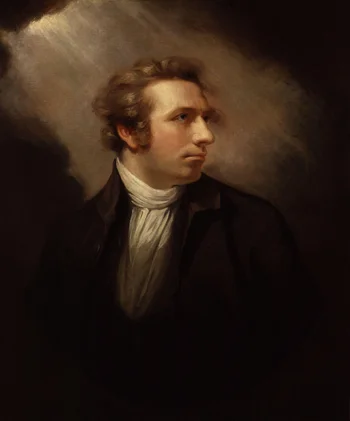
Karl Möbius
February 7, 1825 — April 26, 1908 — Eilenburg, Prussia
Karl August Möbius was a German zoologist whose studies of oyster beds gave ecology one of its foundational concepts. Born in 1825, he built institutions that shaped how Europeans studied and displayed the natural world, from a public aquarium in Hamburg to the research collections of Berlin's Natural History Museum. His idea that organisms and their environment form an interdependent community remains central to ecological science today.
Early Life and Education
Karl August Möbius was born on February 7, 1825, in Eilenburg, in the Kingdom of Prussia. He initially trained as a schoolteacher, a common path for young men of modest means interested in natural history during the early nineteenth century, and worked for several years instructing students while pursuing his growing fascination with zoology on the side. Determined to deepen his scientific knowledge, he eventually enrolled at the University of Berlin, where he studied under the renowned physiologist and comparative anatomist Johannes Müller, one of the most influential biologists of the era. Müller's rigorous, observation-based approach to studying marine organisms left a lasting imprint on Möbius, steering him toward the systematic investigation of aquatic life. This combination of a teacher's clarity and a scientist's precision would later define Möbius's own career, both as a researcher and as an institution builder. His early exposure to marine specimens and fieldwork set the stage for the innovative ecological thinking that would eventually make him famous.
Career and Major Achievements
Möbius became a professor at the University of Kiel, where he founded the university's zoological institute and conducted extensive research on Baltic Sea marine life, particularly mollusks and other invertebrates. His most influential contribution came from a practical problem: declining oyster populations along the German coast. Commissioned to study oyster beds, Möbius published 'Die Auster und die Austernwirtschaft' ('The Oyster and Oyster Farming') in 1877, in which he introduced the term 'biocoenosis' to describe a community of organisms living together and interacting with their shared environment as an integrated whole. This concept became a cornerstone of modern ecology, anticipating later ideas about ecosystems and interdependence among species. Möbius also founded the Hamburg Zoo and its associated public aquarium, applying his scientific expertise to popular education and public engagement with marine biology. His talent for organizing scientific collections and institutions culminated in his appointment as director of the Natural History Museum in Berlin in 1887, a position he held for years, shaping the museum into a major European scientific institution.
Did You Know?
Karl Möbius coined the term 'biocoenosis' in 1877 while studying why oyster populations were collapsing along Germany's coast. His insight that organisms and their environment form a single interdependent community laid essential groundwork for the modern concept of the ecosystem, decades before that term was even invented.
Legacy and Impact
As director in Berlin, Möbius introduced a transformative curatorial philosophy: separating scientific research collections from the specimens displayed to the public. This distinction allowed researchers to maintain extensive, detailed collections for study while curating more accessible, educational exhibits for visitors, a model that influenced natural history museums worldwide and remains standard practice today. Möbius continued publishing scientific work throughout his later career, including studies on marine fauna from regions as distant as Mauritius, reflecting his broad curiosity about global biodiversity. He died on April 26, 1908, in Berlin, leaving behind a dual legacy as both a rigorous ecological theorist and a skilled institution builder. His concept of biocoenosis directly influenced the later development of the ecosystem concept in ecology, and the institutions he founded or shaped, the Kiel zoological institute, the Hamburg Zoo, and the Berlin Natural History Museum, continued to serve science and public education long after his death. Today, Möbius is remembered as a founding figure in marine ecology.