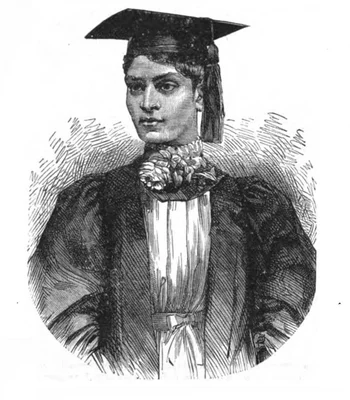
Mikhail Alekseyev
November 15, 1857 — September 25, 1918 — Tver Governorate, Russia
Mikhail Vasilyevich Alekseyev was one of the most prominent Russian military leaders of the early twentieth century, guiding the Imperial Army through much of World War I as Chief of Staff to Tsar Nicholas II. After the tsar's abdication in 1917, he briefly commanded Russia's armed forces under the Provisional Government before becoming a founding architect of the Volunteer Army that fought the Bolsheviks in the Russian Civil War.
Early Life and Military Formation
Mikhail Alekseyev was born in 1857 into a modest family, the son of a soldier who had risen from the ranks. Unlike many of his aristocratic peers in the Imperial Russian officer corps, Alekseyev came from humble origins, which shaped his reputation as a hardworking, self-made professional rather than a product of noble privilege. He entered military service in his youth and distinguished himself through diligence and intellectual ability, eventually earning admission to the prestigious Nikolayevskaya Military Academy in St. Petersburg. There he excelled in the study of strategy and staff work, qualities that would define his subsequent career. He served with distinction during the Russo-Turkish War of 1877–78 and later the Russo-Japanese War of 1904–05, steadily building a reputation as one of the Russian Army's most capable staff officers and strategic planners. By the early twentieth century, Alekseyev had established himself as a rigorous administrator and thinker within the military establishment, known for his meticulous planning and deep understanding of logistics, qualities increasingly rare among the Imperial officer corps and ones that would soon be tested on an unprecedented scale.
Chief of Staff of the Stavka
When World War I erupted in 1914, Alekseyev's organizational talents proved indispensable to Russia's massive but often poorly coordinated war machine. After serving in key command and staff roles during the war's opening campaigns, he was appointed Chief of Staff of the Stavka, the Imperial Russian high command, in 1915, a position he held until 1917. In this role, Alekseyev effectively directed Russia's military strategy on behalf of Tsar Nicholas II, who had taken personal command of the armed forces but relied heavily on Alekseyev's expertise. He worked tirelessly to manage the enormous logistical and manpower challenges of the Eastern Front, coordinating operations across a vast theater while contending with shortages of supplies, equipment, and trained personnel. Following the February Revolution of 1917 and the tsar's abdication, Alekseyev was appointed commander-in-chief of the Russian armed forces under the new Provisional Government, serving from March to May 1917. However, the collapsing discipline within the army, fueled by revolutionary agitation and the Provisional Government's own instability, made effective command increasingly impossible, and he was soon removed from his post.
Did You Know?
Unlike most senior Imperial Russian officers, Alekseyev did not come from the nobility—he was the son of a soldier who had worked his way up through the ranks, making his rise to Chief of Staff of the entire Russian Army a remarkable achievement in a rigidly class-conscious military establishment.
The Volunteer Army and Death
After his removal from command, Alekseyev refused to abandon the fight against what he saw as the destruction of Russia by radical revolutionary forces. As the Bolsheviks seized power in October 1917 and plunged the country into civil war, he traveled to southern Russia and became one of the principal founders of the Volunteer Army, the primary White Army force opposing Bolshevik rule. Alongside generals such as Lavr Kornilov and Anton Denikin, Alekseyev worked to organize, finance, and legitimize the fledgling anti-Bolshevik movement, drawing on his considerable prestige and administrative experience to build the political and logistical foundations of White resistance in the Volga and Don regions. Exhausted by decades of military service and the immense strain of the civil war's early campaigns, Alekseyev's health deteriorated rapidly in 1918. He died of heart failure on September 25, 1918, while the Volunteer Army continued its struggle against Bolshevik forces. His death removed one of the White movement's most experienced organizers at a critical early stage, though the Volunteer Army he helped found continued fighting for years afterward, cementing his legacy as a founding figure of White resistance in the Russian Civil War.