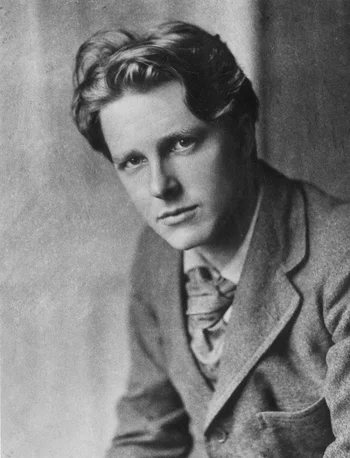
Morris Berman
Morris Berman is an American historian and social critic renowned for his sweeping analyses of Western intellectual history and American culture. Trained as a mathematician before turning to the history of science, he became one of the most provocative voices examining the decline of modern civilization. His body of work spans the history of consciousness, the disenchantment of the modern world, and pointed critiques of contemporary American society.
Early Life and Education
Morris Berman was born on August 3, 1944, in the United States. He pursued an unconventional academic path, first earning a Bachelor of Arts in mathematics from Cornell University in 1966. Rather than continuing in mathematics, Berman shifted his intellectual focus toward the humanities, enrolling at Johns Hopkins University to study the history of science. He completed his PhD there in 1971, a discipline that bridges scientific inquiry with broader cultural and philosophical questions. This unusual combination of quantitative training and historical scholarship shaped his later approach to cultural criticism, allowing him to analyze Western civilization's intellectual traditions with both rigor and a distinctly interdisciplinary sensibility. His education positioned him to become an academic humanist cultural critic, one who would go on to specialize in Western cultural and intellectual history while questioning many of the assumptions underlying modern scientific and social thought.
Career and Major Works
Berman built his career as a historian and social critic who challenged conventional narratives about progress and modernity. His breakthrough book, 'The Reenchantment of the World' (1981), argued that the scientific revolution had stripped meaning and mystery from human experience, a thesis that resonated widely in academic and popular circles. He continued exploring consciousness and embodiment in 'Coming to Our Senses' (1989) and examined prehistoric spirituality in 'Wandering God' (2000). Berman is perhaps best known for his trilogy examining American cultural decline: 'The Twilight of American Culture' (2000), 'Dark Ages America' (2006), and 'Why America Failed' (2011). These works controversially argued that the United States was following a trajectory of decline comparable to historical empires, driven by consumerism, militarism, and the erosion of civic culture. Berman taught at several universities throughout his career, including Southern Illinois University and George Washington University, where he engaged students with his interdisciplinary approach to cultural history.
Did You Know?
Morris Berman initially trained as a mathematician at Cornell before pivoting entirely to the history of science at Johns Hopkins. He later became so disillusioned with American culture that he relocated to Mexico, a move that directly shaped his provocative trilogy on the decline of American civilization.
Later Life and Legacy
In the mid-2000s, Berman relocated from the United States to Mexico, a move that reflected the deep disillusionment with American society expressed throughout his later writings. Living abroad allowed him to observe and critique American culture from a distance, further informing his work on national decline. He continued writing prolifically, producing memoirs, essays, and cultural commentary that expanded on his central themes of disenchantment, community, and the loss of meaning in modern life. Berman's legacy rests on his willingness to challenge comfortable assumptions about progress, technology, and American exceptionalism. His interdisciplinary blend of history, sociology, and cultural critique influenced readers and scholars grappling with questions of meaning in a secular, technological age. Though his pessimistic conclusions about American civilization proved controversial, his body of work remains a significant contribution to discussions about modernity, disenchantment, and the fate of Western culture, securing his place as an important, if provocative, public intellectual.