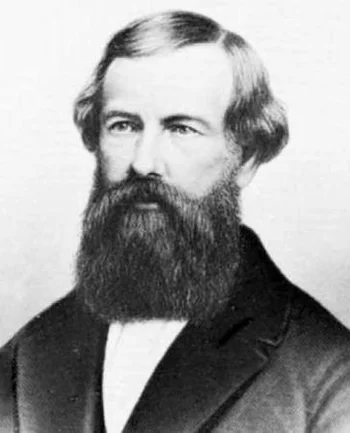
Rupert Brooke
August 3, 1887 — April 23, 1915 — Rugby, England
Rupert Brooke was an English poet whose idealistic sonnets about the First World War made him one of the most celebrated literary figures of his generation. Renowned as much for his striking good looks as for his verse, Brooke became a symbol of youthful sacrifice after his early death in 1915. His poem 'The Soldier' remains one of the most quoted pieces of English war literature.
Early Life and Education
Rupert Chawner Brooke was born on August 3, 1887, in Rugby, Warwickshire, England, where his father taught at the prestigious Rugby School. Brooke grew up immersed in an academic environment and attended Rugby School himself, excelling in both scholarship and athletics. He later won a scholarship to King's College, Cambridge, where he became a central figure in the university's vibrant intellectual and artistic circles. At Cambridge, Brooke joined the Cambridge Apostles, a secret society of intellectuals, and formed friendships with members of the Bloomsbury Group, including Virginia Woolf and Lytton Strachey. His striking appearance and charisma made him a favorite among his peers; the Irish poet W. B. Yeats reportedly called him 'the handsomest young man in England.' Brooke's early poetry, influenced by Georgian traditions, showed a lyrical sensitivity to nature and youth. Before the war, he traveled extensively, including a notable trip to the South Pacific, which broadened his poetic voice. These formative years shaped both his literary style and his idealistic worldview, setting the stage for the work that would define his legacy.
War Poetry and Literary Achievement
When the First World War broke out in 1914, Brooke enlisted in the Royal Naval Division, driven by a patriotic fervor that would come to define his most famous work. He wrote a sequence of five war sonnets, including 'The Soldier' and 'The Dead,' which captured an idealized, romantic vision of sacrifice for one's country. Unlike the disillusioned tone that would later characterize war poetry by figures such as Wilfred Owen, Brooke's sonnets expressed a noble, almost pastoral acceptance of death in service of England. 'The Soldier,' with its opening line 'If I should die, think only this of me,' became emblematic of early wartime patriotism and was widely read and quoted, including in a sermon at St Paul's Cathedral in 1915. These poems, published in his collection '1914 and Other Poems,' cemented his reputation as a leading voice of his era. Brooke's verse resonated deeply with the British public precisely because it offered a comforting, heroic narrative of war at a time when the true horrors of trench warfare had not yet been fully realized. His literary achievement, though modest in volume, left a lasting imprint on the canon of English war poetry.
Did You Know?
Rupert Brooke never experienced combat during World War I; he died from blood poisoning caused by a mosquito bite before his unit reached the battlefield at Gallipoli. Despite this, his sonnet 'The Soldier' became one of the most iconic pieces of war poetry in the English language, quoted in a sermon at St Paul's Cathedral just weeks after his death.
Death and Lasting Legacy
Brooke's life was cut tragically short before he ever saw combat. In April 1915, while serving with the British Mediterranean Expeditionary Force en route to the Gallipoli campaign, he developed septicaemia from an infected mosquito bite. He died on April 23, 1915, aboard a French hospital ship moored off the Greek island of Skyros in the Aegean Sea, at just 27 years old. He was buried in an olive grove on Skyros, and his grave became a site of pilgrimage for admirers of his work. Brooke's death, occurring so early in the war and before the grim realities of trench warfare became widely known, allowed his idealistic poetry to remain untarnished by irony or disillusionment, unlike the work of poets who survived longer into the conflict. This timing contributed significantly to his lasting cultural legacy as a symbol of youthful patriotism and sacrifice. His image—handsome, promising, and prematurely lost—became deeply embedded in the British national memory of the war. Today, Brooke is remembered both as a talented Georgian poet and as an emblem of a generation of young men whose lives were cut short, his sonnets continuing to be studied and quoted in discussions of war literature and national identity.