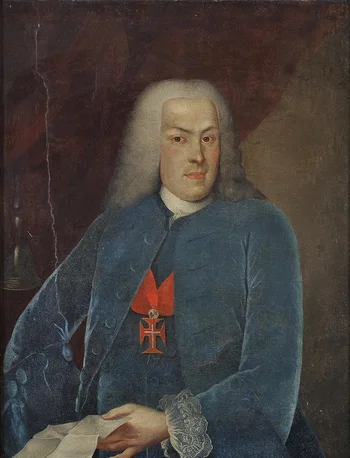
Oskar Rosenfeld
May 13, 1884 — August 1944 — Koryčany, Moravia, Austria-Hungary
Oskar Rosenfeld was an Austrian-Jewish writer and journalist whose career spanned literary Vienna and the horrors of the Lodz ghetto. A respected essayist and cultural commentator before World War II, he later became one of the ghetto's official chroniclers, leaving behind detailed notebooks that remain a crucial historical record of daily life under Nazi persecution. He was murdered at Auschwitz concentration camp in 1944.
Early Life and Literary Beginnings
Oskar Rosenfeld was born on May 13, 1884, in Koryčany (Koritschan), a small town in Moravia, then part of Austria-Hungary. He grew up in a Jewish community steeped in Central European intellectual traditions, and he pursued education that led him toward writing and journalism rather than more conventional professions. By the early twentieth century, he had settled in Vienna, then one of Europe's great cultural capitals, where he immersed himself in the city's vibrant literary and Zionist circles. Rosenfeld became known as a versatile writer, contributing essays, feuilletons, and cultural criticism to various publications, including the Zionist-oriented newspaper Die Wahrheit. His work reflected the broader concerns of Austrian Jewry in the interwar period: questions of identity, assimilation, and the growing precariousness of Jewish life in Central Europe. As a journalist, he displayed a keen eye for social observation and a commitment to documenting the world around him with precision and insight—qualities that would later prove indispensable in far darker circumstances.
Deportation and the Lodz Ghetto Chronicle
Rosenfeld's life changed irrevocably with the Nazi annexation of Austria in 1938 and the subsequent outbreak of World War II. In 1941, he was deported to the Lodz ghetto in German-occupied Poland, one of the largest Jewish ghettos established by the Nazi regime. There, his writing skills were put to grim use: he was assigned to the ghetto's Statistics Department, where officials compiled the so-called 'Chronicle of the Lodz Ghetto,' a day-by-day record of ghetto life. Rosenfeld contributed extensively to this project while also keeping his own private notebooks, written in a dense, often coded mixture of German, Yiddish, and Hebrew. In these pages, he recorded the deteriorating conditions, the desperate hunger, the deportations to death camps, and the small acts of resistance and humanity that persisted amid catastrophe. Unlike official reports, his personal notebooks captured intimate reflections on suffering, morality, and the collapse of civilization, offering a uniquely literary and philosophical perspective on the ghetto experience. Rosenfeld understood his writing as a form of testimony, determined that the truth of what was happening should survive even if he did not.
Did You Know?
Oskar Rosenfeld wrote much of his ghetto notebook in a private, coded mixture of German, Yiddish, and Hebrew, partly to protect its contents from discovery. The notebooks survived the war hidden away, and were only later deciphered, translated, and published decades after his death at Auschwitz.
Death at Auschwitz and Enduring Legacy
When the Lodz ghetto was liquidated in August 1944, Rosenfeld was among the thousands deported to Auschwitz-Birkenau, where he was killed shortly after arrival. He did not survive to see the war's end or to know that his writings would endure. Remarkably, his notebooks survived the war, hidden and later recovered, offering historians an extraordinary firsthand account of life and death in the Lodz ghetto. Decades later, his notebooks were compiled, translated, and published as 'In the Beginning Was the Ghetto: Notebooks from Lodz,' edited by Hanno Loewy, bringing his voice to a new generation of readers. Rosenfeld's writings are now regarded as among the most significant literary testimonies of the Holocaust, valued for their intellectual depth, moral seriousness, and refusal to look away from horror. His work stands alongside other ghetto diaries and chronicles as essential documentation of the Holocaust, ensuring that his observations—and the lives of those he wrote about—are not forgotten.