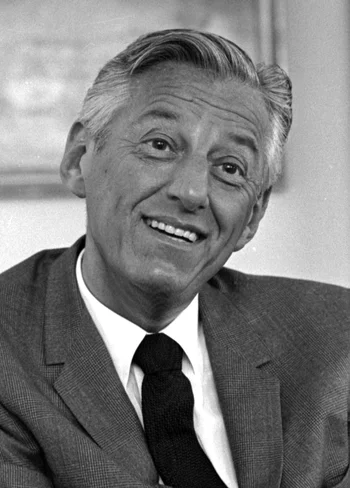
Paul Heyse
March 15, 1830 — April 2, 1914 — Berlin, Kingdom of Prussia
Paul Heyse was a German writer and translator whose vast literary output—spanning novels, poetry, nearly sixty dramas, and 177 short stories—made him one of the towering figures of nineteenth-century German letters. In 1910 he received the Nobel Prize in Literature, becoming one of the most celebrated German authors of his generation, with one Nobel judge comparing his genius to that of Goethe. Though his fame faded somewhat after his death, during his lifetime he was regarded as the leading man of letters in the German-speaking world.
Early Life and Education
Paul Johann Ludwig von Heyse was born on March 15, 1830, in Berlin, into a cultured and academically distinguished family. His father, Karl Wilhelm Ludwig Heyse, was a noted philologist, and his mother came from a well-connected Jewish family, giving young Paul early exposure to literature, classical languages, and intellectual society. He studied classical philology and Romance languages at the universities of Berlin and Bonn, developing a lifelong fascination with Italian and Spanish literature that would later shape his own fiction and translations. While still a student, he became active in Berlin's literary circles, most notably joining the Tunnel über der Spree, a society of poets and writers that fostered his early creative ambitions. This formative period gave Heyse both rigorous scholarly training and a network of literary relationships that would sustain his career for decades. His early poetry and academic work marked him as a promising talent, and by his mid-twenties he had already begun to establish a reputation as a gifted stylist, setting the stage for the prolific literary career that followed.
Literary Career and Major Works
In 1854, King Maximilian II of Bavaria invited Heyse to Munich, where he became a central figure among the writers and scholars the king had gathered at his court. There Heyse helped found Die Krokodile, another influential literary society, and settled into the city that would remain his home for the rest of his life. Over the following decades he produced an extraordinary volume of work: novels, plays, poetry collections, and above all short stories and novellas, a genre in which he became a recognized master. His novella "L'Arrabbiata" (1855) exemplified his refined, elegant prose style and his interest in Italian settings and passionate characters. Heyse also worked extensively as a translator, rendering Italian and Spanish poetry into German and helping introduce these literary traditions to a wider German audience. His dramas, though less enduring than his short fiction, contributed to his reputation as a versatile and disciplined craftsman. By the late nineteenth century, Heyse's combined output—novels, some sixty dramas, and 177 short stories—had made him one of the most prolific and widely read authors in the German language, admired for the artistic polish and idealistic spirit that ran through his work.
Did You Know?
Paul Heyse wrote an astonishing 177 short stories over his lifetime, alongside novels, poetry, and about sixty dramas—an output so vast that a Nobel judge compared his genius to Goethe's. He remains one of the oldest people ever to win the Nobel Prize in Literature, receiving it at age 80.
Nobel Prize and Legacy
In 1910, Heyse was awarded the Nobel Prize in Literature "as a tribute to the consummate artistry, permeated with idealism, which he has demonstrated during his long productive career as a lyric poet, dramatist, novelist and writer of world-renowned short stories." The Swedish Academy's recognition cemented his status as the dominant literary figure of his era in Germany; Carl David af Wirsén, one of the Nobel judges, declared that Germany had not produced a greater literary genius since Goethe. Heyse remains among the oldest laureates ever honored with the Nobel Prize in Literature, having received it at age 80. He continued writing until his death in Munich on April 2, 1914, having witnessed sweeping changes in German literary taste, including the rise of naturalism and modernism that would eventually overshadow his more idealistic, classically inspired style. In the decades after his death, Heyse's reputation declined as literary fashions shifted, yet his mastery of the novella form and his role in shaping nineteenth-century German prose remain historically significant. His life and career illustrate both the heights of literary celebrity attainable in Wilhelmine Germany and the shifting currents of taste that can reshape an author's posthumous legacy.