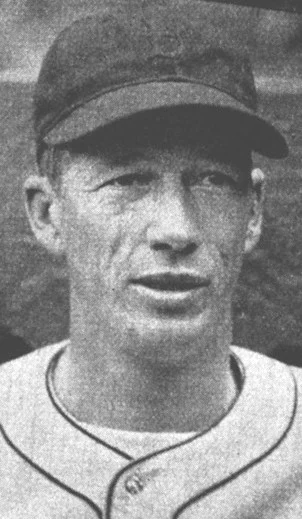
Ring Lardner
March 6, 1885 — September 25, 1933 — Niles, Michigan, United States
Ring Lardner was an American sports columnist and short story writer whose sharp, satirical eye captured the absurdities of sports, marriage, and the theatre. Admired by contemporaries such as Ernest Hemingway, Virginia Woolf, and F. Scott Fitzgerald, Lardner became one of the most influential prose stylists of the early twentieth century. His mastery of vernacular dialogue shaped generations of American writers, including John O'Hara, who credited Lardner with teaching him how to write realistic speech.
Early Life
Ringgold Wilmer Lardner was born in 1885 in Niles, Michigan, the youngest of nine children in a well-to-do family. His parents, Henry and Lena Lardner, provided their children with a private education at home before Ring eventually attended Niles High School. As a young man, he showed an early aptitude for observation and wit, qualities that would later define his writing career. Lardner briefly studied mechanical engineering at the Armour Institute of Technology in Chicago, but the pursuit did not suit him, and he left before completing a degree. His true talents lay not in engineering but in language, humor, and a keen ear for the way ordinary Americans spoke—skills he began to hone as he entered the world of journalism in the early 1900s, working his way up through small Midwestern newspapers before landing more prominent reporting jobs.
Career and Major Works
Lardner rose to prominence as a sportswriter, eventually becoming one of the most widely read sports columnists in the country through his syndicated column 'In the Wake of the News' for the Chicago Tribune. His fiction, however, cemented his lasting literary reputation. Lardner's breakthrough came with 'You Know Me Al' (1916), an epistolary novel told through the semi-literate letters of a fictional baseball player, showcasing his gift for capturing authentic American vernacular speech. He followed this success with acclaimed short story collections such as 'How to Write Short Stories' (1924) and 'Round Up' (1929), which satirized everything from small-town pretensions to the institution of marriage. His stories, including classics like 'Haircut' and 'Champion,' revealed a darker, more cynical undercurrent beneath their comedic surfaces, exposing cruelty, self-delusion, and hypocrisy in American life. Lardner's economical, dialogue-driven style influenced the emerging modernist movement and earned him the admiration of literary giants of his era.
Did You Know?
Ring Lardner's 1916 novel 'You Know Me Al' was written entirely as a series of letters from a fictional, barely literate minor-league baseball pitcher—a stylistic gamble that became one of the first major works of American fiction to use authentic vernacular dialogue as its narrative voice.
Later Life and Legacy
In his later years, Lardner's health declined due to tuberculosis and heart disease, conditions exacerbated by years of heavy drinking. Despite his failing health, he continued writing, including venturing into playwriting and even collaborating on a Broadway production. He died on September 25, 1933, at his home in East Hampton, New York, at the age of 48. Lardner's legacy endured well beyond his lifetime: his innovative use of colloquial dialogue and satirical wit left an indelible mark on American literature, influencing writers from Ernest Hemingway to John O'Hara. His son, Ring Lardner Jr., became an acclaimed screenwriter who won two Academy Awards, though he was later blacklisted during the McCarthy era for refusing to testify before the House Un-American Activities Committee. Today, Ring Lardner is remembered as a pioneering figure who elevated sports and popular culture into serious literary subject matter, while his sharp social satire continues to resonate with modern readers.