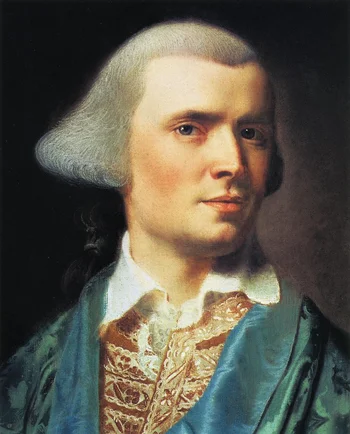
Sir Thomas Richardson
July 3, 1569 — 1635 — Honingham, Norfolk, England
Sir Thomas Richardson was an English judge and politician best remembered for serving as Speaker of the House of Commons during the parliament of 1621–1622. He went on to become one of the most senior judges in England, holding the posts of Chief Justice of the Common Pleas and Chief Justice of the King's Bench. His long career placed him at the heart of both England's legal system and its turbulent early Stuart-era politics.
Early Life and Legal Training
Thomas Richardson was born on July 3, 1569, at Honingham in Norfolk, into a gentry family that would give him the social standing needed to pursue a career in law and public service. Like many ambitious young men of his generation destined for the legal profession, he trained at one of the Inns of Court in London, where he studied common law and built the connections essential to advancement in England's courts. He was called to the bar and steadily built a reputation as a capable lawyer, eventually attaining the rank of serjeant-at-law, a senior order of barristers from which many judges of the period were drawn. His early career coincided with the reign of Elizabeth I and the accession of James I, a time when skilled lawyers could rise rapidly through both the courts and Parliament. Richardson's growing prominence in legal circles paved the way for his entry into national politics, and by the early 1620s he had positioned himself as a figure of consequence in both Westminster and the legal establishment, setting the stage for the offices that would define his public life.
Speaker of the House of Commons
Richardson's most notable early public role came when he was chosen as Speaker of the House of Commons for the parliament that sat from 1621 to 1622. As Speaker, he presided over the Commons during a period of significant tension between Parliament and the Crown, particularly over issues of royal prerogative, foreign policy, and the rights of the House to debate matters of state. The 1621 parliament is remembered for the Commons' Protestation asserting its privileges, a dispute that ultimately led James I to dissolve Parliament. Serving as Speaker required Richardson to balance loyalty to the monarch, who traditionally approved the appointment, with his duty to manage and represent the interests of the House itself. This delicate position demanded political skill and legal knowledge in equal measure, qualities Richardson had honed throughout his career at the bar. His tenure as Speaker marked the high point of his direct involvement in representative politics and cemented his reputation as a trusted figure capable of operating at the intersection of law and governance, experience that would serve him well as he moved toward the senior judicial appointments that followed.
Did You Know?
As Chief Justice of the Common Pleas, Richardson stirred controversy while on judicial circuit in Somerset by permitting traditional Sunday recreations that local Puritan magistrates had banned—a dispute that helped prompt King Charles I's government to reissue the famous 'Book of Sports' declaration in 1633.
Chief Justice and Later Career
Following his time in the Commons, Richardson's career advanced into the highest ranks of the English judiciary. He was appointed Chief Justice of the Common Pleas, one of the two great common-law courts of England, and later moved to become Chief Justice of the King's Bench, the most senior common-law judicial office in the country. In these roles, Richardson presided over major cases and rode judicial circuits across England, a duty that occasionally drew him into controversy with ecclesiastical authorities over local customs and recreations permitted on Sundays, reflecting the broader religious and political tensions of Charles I's early reign. His judicial career unfolded during a period of mounting friction between the Crown, the courts, and Parliament, as England moved toward the constitutional crises of the 1630s and 1640s. Richardson died in 1635, having spent decades at the center of English law and governance. He is remembered today as a judge whose career traced the arc of early Stuart England, moving from Parliament's chamber to the bench of its most powerful courts, and whose life illustrates how legal expertise and political service were closely intertwined in seventeenth-century England.