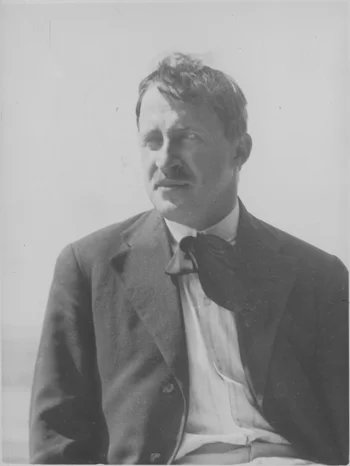
Tomoyuki Yamashita
November 8, 1885 — February 23, 1946 — Osugi, Kochi Prefecture, Japan
Tomoyuki Yamashita was a Japanese Imperial Army general whose lightning conquest of Malaya and Singapore in 1942 earned him lasting fame as the 'Tiger of Malaya.' Later tasked with defending the Philippines against overwhelming Allied forces, he held out on Luzon until Japan's formal surrender. After the war, he was tried and executed for atrocities committed by troops under his command, a case that established a controversial legal precedent for military command responsibility.
Early Life and Military Rise
Tomoyuki Yamashita was born on November 8, 1885, in a small village in Kochi Prefecture, Japan, the son of a country doctor. He entered the Imperial Japanese Army Academy, graduating in 1905, and later attended the elite Army War College, distinguishing himself as a capable staff officer. In the 1920s, he served as a military attaché in Germany, Austria, and Switzerland, an experience that exposed him to European military thought and diplomacy. Returning to Japan, Yamashita rose steadily through the ranks, holding a series of command and staff positions. He became associated with a faction within the army that clashed politically with rivals loyal to future Prime Minister Hideki Tojo, a rivalry that would later affect his career trajectory. Despite these internal tensions, Yamashita earned a reputation as a competent and disciplined commander, and by the late 1930s he had attained senior rank, positioning him for the major combat commands he would receive once Japan entered full-scale war with the Western powers in December 1941.
The Tiger of Malaya
In December 1941, Yamashita took command of the Twenty-Fifth Army and launched the invasion of British Malaya, advancing rapidly southward using bicycle infantry and tanks to outmaneuver larger Allied garrisons. His forces pushed through jungle terrain the British had considered nearly impassable, culminating in the Battle of Singapore. On February 15, 1942, he accepted the surrender of British Lieutenant-General Arthur Percival, capturing the supposedly impregnable fortress city in just 70 days and taking roughly 80,000 Allied troops prisoner. The stunning victory made Yamashita famous worldwide as the 'Tiger of Malaya' and dealt a devastating blow to British prestige in Asia. Despite this triumph, his political rival Tojo, then prime minister, denied him a hero's reception in Tokyo and instead reassigned him to a quieter command in Manchuria, keeping him away from the spotlight for much of the following two years. Only after Tojo's fall from power in 1944 was Yamashita recalled to a major combat post, this time to defend the Philippines against the advancing American forces led by General Douglas MacArthur.
Did You Know?
Yamashita conquered Malaya and Singapore—territory the British had spent decades fortifying—in just 70 days, despite being outnumbered by the defending garrison. Ironically, his political rival Tojo denied him public recognition for the victory, and he spent much of the next two years sidelined in Manchuria before receiving his final, doomed command in the Philippines.
The Philippines Campaign, Trial, and Execution
In October 1944, Yamashita assumed command of the Fourteenth Area Army in the Philippines, facing overwhelming Allied naval and air superiority with dwindling supplies and reinforcements. He sought to avoid a destructive battle for Manila, but naval forces outside his direct control ignored his orders and fought a brutal, unauthorized defense of the city, resulting in the deaths of over 100,000 Filipino civilians in what became known as the Manila massacre. Yamashita withdrew his main forces into the mountains of northern Luzon, conducting a prolonged defense that held out until Japan's formal surrender in September 1945. He surrendered on September 2, 1945. The United States then tried him before a military commission for war crimes committed by troops nominally under his command, even though evidence showed communication had broken down and he had not ordered the atrocities. Convicted on the theory that a commander bears responsibility for failing to prevent subordinates' crimes—later known as the 'Yamashita standard'—he was sentenced to death and executed by hanging on February 23, 1946, near Manila. The case remains a landmark and controversial precedent in international military law.