On This Day — 3 September
2000s

2017
North Korea conducts its sixth and most powerful nuclear test.
North Korea

2016
The U.S. and China, together responsible for 40% of the world's carbon emissions, both formally ratify the Paris global climate agreement.
China

2010
After taking off from Dubai International Airport, UPS Airlines Flight 6 develops an in-flight fire in the cargo hold and crashes near Nad Al Sheba, killing both crew members on board.
Dubai International Airport
2004
Beslan school siege results in over 330 fatalities, including 186 children.
Beslan school siege

2001
In Belfast, Protestant loyalists begin a picket of Holy Cross, a Catholic primary school for girls.
Belfast
1900s

1997
Vietnam Airlines Flight 815 (Tupolev Tu-134) crashes on approach into Phnom Penh airport, killing 64.
Vietnam Airlines

1989
Cubana de Aviación Flight 9046 crashes into a residential area of Havana shortly after takeoff from José Martí International Airport, killing 150.
Cubana de Aviación Flight 9046

1989
Varig Flight 254 crashes in the Amazon rainforest near São José do Xingu in Brazil, killing 12.
Varig Flight 254

1987
In a coup d'état in Burundi, President Jean-Baptiste Bagaza is deposed by Major Pierre Buyoya.
1987 Burundian coup d'état

1981
The Convention on the Elimination of All Forms of Discrimination Against Women, an international bill of rights for women, is instituted by the United Nations.
Convention on the Elimination of All Forms of Discrimination Against Women

1978
During the Rhodesian Bush War a group of ZIPRA guerrillas shot down civilian Vickers Viscount aircraft (Air Rhodesia Flight 825) with a Soviet-made SAM Strela-2; of 56 passengers and crew 38 people died in crash, 10 were massacred by the guerrillas at the site.
Rhodesian Bush War

1976
Viking program: The American Viking 2 spacecraft lands at Utopia Planitia on Mars.
Viking program

1971
Qatar becomes an independent state.
Qatar

1967
Dagen H in Sweden: Traffic changes from driving on the left to driving on the right overnight.
Dagen H

1954
The People's Liberation Army begins shelling the Republic of China-controlled islands of Quemoy, starting the First Taiwan Strait Crisis.
People's Liberation Army

1950
"Nino" Farina becomes the first Formula One Drivers' champion after winning the 1950 Italian Grand Prix.
Giuseppe Farina

1945
A three-day celebration begins in China, following the Victory over Japan Day on September 2.
Victory over Japan Day

1944
Holocaust: Diarist Anne Frank and her family are placed on the last transport train from the Westerbork transit camp to the Auschwitz concentration camp, arriving three days later.
Diary

1943
World War II: British and Canadian troops land on the Italian mainland. On the same day, Walter Bedell Smith and Giuseppe Castellano sign the Armistice of Cassibile, although it is not announced for another five days.
Operation Baytown
1942
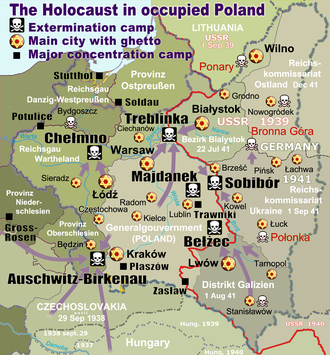
World War II: In response to news of its coming liquidation, Dov Lopatyn leads an uprising in the Ghetto of Lakhva (present-day Belarus).
Łachwa Ghetto

1941
The Holocaust: Karl Fritzsch, deputy camp commandant of the Auschwitz concentration camp, experiments with the use of Zyklon B in the gassing of Soviet POWs.
The Holocaust

1939
World War II: France, the United Kingdom, New Zealand and Australia declare war on Germany after the invasion of Poland, forming the Allied nations. The Viceroy of India also declares war, but without consulting the provincial legislatures.
World War II

1939
World War II: The United Kingdom and France begin a naval blockade of Germany that lasts until the end of the war. This also marks the beginning of the Battle of the Atlantic.
Blockade of Germany (1939–1945)

1935
Sir Malcolm Campbell reaches a speed of 304.331 miles per hour on the Bonneville Salt Flats in Utah, becoming the first person to drive an automobile over 300 mph.
Malcolm Campbell

1933
Yevgeniy Abalakov is the first man to reach the highest point in the Soviet Union, Communism Peak (now called Ismoil Somoni Peak and situated in Tajikistan) (7495 m).
Yevgeniy Abalakov

1925
USS Shenandoah, the United States' first American-built rigid airship, was destroyed in a squall line over Noble County, Ohio. Fourteen of her 42-man crew perished, including her commander, Zachary Lansdowne.
USS Shenandoah (ZR-1)

1916
World War I: Leefe Robinson destroys the German airship Schütte-Lanz SL 11 over Cuffley, north of London; the first German airship to be shot down on British soil.
Leefe Robinson

1914
Wilhelm, Prince of Albania leaves the country after just six months due to opposition to his rule.
Wilhelm, Prince of Albania

1914
French composer Albéric Magnard is killed defending his estate against invading German soldiers.
Albéric Magnard

1914
World War I: Start of the Battle of Grand Couronné, a German assault against French positions on high ground near the city of Nancy.
World War I

1911
A fire that started on Fraser's Million Dollar Pier destroys six to eight square blocks of Ocean Park, California.
Fraser's Million Dollar Pier
1800s

1895
John Brallier becomes the first openly paid professional American football player, when he was paid US$10 by David Berry, to play for the Latrobe Athletic Association in a 12–0 win over the Jeanette Athletic Association.
John Brallier

1879
Siege of the British Residency in Kabul: British envoy Sir Louis Cavagnari and 72 men of the Guides are massacred by Afghan troops while defending the British Residency in Kabul. Their heroism and loyalty became famous and revered throughout the British Empire.
Siege of the British Residency in Kabul

1878
Over 640 die when the crowded pleasure boat Princess Alice collides with the Bywell Castle in the River Thames.
Sinking of SS Princess Alice

1875
The first official game of polo is played in Argentina after being introduced by British ranchers.
Polo
1870
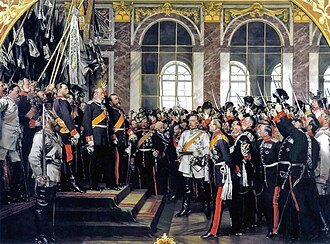
Franco-Prussian War: The Siege of Metz begins, resulting in a decisive Prussian victory on October 23.
Franco-Prussian War

1861
American Civil War: Confederate General Leonidas Polk invades neutral Kentucky, prompting the state legislature to ask for Union assistance.
American Civil War

1855
American Indian Wars: In Nebraska, 700 soldiers under United States General William S. Harney avenge the Grattan massacre by attacking a Sioux village and killing 100 men, women and children.
American Indian Wars

1843
King Otto of Greece is forced to grant a constitution following an uprising in Athens.
Otto of Greece

1838
Future abolitionist Frederick Douglass escapes from slavery.
Abolitionism in the United States

1812
Twenty-four settlers are killed in the Pigeon Roost Massacre in Indiana.
Pigeon Roost State Historic Site
Before 1800
1798
The week long battle of St. George's Caye begins between Spain and Britain off the coast of Belize.
Battle of St. George's Caye

1783
American Revolutionary War: The war ends with the signing of the Treaty of Paris by the United States and the Kingdom of Great Britain.
Treaty of Paris (1783)

1777
American Revolutionary War: During the Battle of Cooch's Bridge, the Flag of the United States is flown in battle for the first time.
American Revolutionary War

1666
The Royal Exchange burns down in the Great Fire of London.
Royal Exchange, London

1658
The death of Oliver Cromwell; Richard Cromwell becomes Lord Protector of England.
Oliver Cromwell

1651
The Battle of Worcester is the last significant action in the Wars of the Three Kingdoms.
Battle of Worcester

1650
Victory over the royalists in the Battle of Dunbar opens the way to Edinburgh for the New Model Army in the Third English Civil War.
Battle of Dunbar (1650)
1411
The Treaty of Selymbria is concluded between the Ottoman Empire and the Republic of Venice.
Treaty of Selymbria

1335
At the congress of Visegrád Charles I of Hungary mediates a reconciliation between two neighboring monarchs, John of Bohemia and Casimir III of Poland.
Charles I of Hungary

1260
The Mamluks defeat the Mongols at the Battle of Ain Jalut in Palestine, marking their first decisive defeat and the point of maximum expansion of the Mongol Empire.
Mamluk

1189
Richard I of England (a.k.a. Richard "the Lionheart") is crowned at Westminster.
Richard I of England

863
Major Byzantine victory at the Battle of Lalakaon against an Arab raid.
Byzantine Empire

673
King Wamba of the Visigoths puts down a revolt by Hilderic, governor of Nîmes (France) and rival for the throne.
Wamba (king)

590
Consecration of Pope Gregory I (Gregory the Great).
Pope Gregory I

301
San Marino, one of the smallest nations in the world and the world's oldest republic still in existence, is founded by Saint Marinus.
San Marino
-36
In the Battle of Naulochus, Marcus Vipsanius Agrippa, admiral of Octavian, defeats Sextus Pompey, son of Pompey, thus ending Pompeian resistance to the Second Triumvirate.
Battle of Naulochus