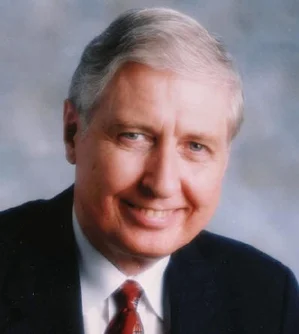
Alexander Shulgin
June 17, 1925 — June 2, 2014 — Berkeley, California
Alexander "Sasha" Shulgin was an American pharmacologist and chemist who, with a unique DEA license permitting him to synthesize Schedule I controlled substances, personally synthesized, characterized, and tested hundreds of novel psychedelic compounds, revived scientific interest in MDMA, and co-authored the books PiHKAL and TiHKAL — meticulous chronicles of his life's work.
From Harvard to Dow to the DEA
Born in Berkeley, California, on June 17, 1925, Shulgin entered Harvard at sixteen and left to serve in the Navy during World War II. After the war, he earned a Ph.D. in biochemistry from UC Berkeley in 1954. He worked for Dow Chemical, where he developed a best-selling pesticide (Zectran) that made Dow so grateful they gave him considerable laboratory freedom — freedom he used to begin exploring psychoactive chemistry. He left Dow in 1966 and established a private laboratory on his farm in Lafayette, California. He obtained a Schedule I research license from the DEA, which allowed him to synthesize and personally test substances that were otherwise strictly controlled. He worked as a consultant and expert witness for the DEA, which regarded his expertise as uniquely valuable.
MDMA and the Psychedelic Synthesis Work
Although MDMA had first been synthesized by Merck in 1912, it had received almost no scientific attention. Shulgin re-synthesized it in 1976 and, after testing it himself, introduced it to psychotherapist Leo Zeff, who then distributed it to hundreds of therapists who used it in therapeutic settings. The compound spread into the club and rave scene as "Ecstasy" in the 1980s, leading to its Schedule I scheduling in 1985. Shulgin also synthesized or rediscovered and catalogued hundreds of other phenethylamine and tryptamine compounds, testing them carefully at different doses and recording detailed notes on their effects. This work was compiled in PiHKAL: A Chemical Love Story (1991) and TiHKAL: The Continuation (1997), co-authored with his wife Ann.
Did You Know?
Alexander Shulgin's DEA license was revoked in 1994, shortly after he published PiHKAL — which included detailed synthesis instructions for hundreds of Schedule I substances. The DEA conducted a thorough inspection of his laboratory and fined him $25,000. Many observers believed the publication of the synthesis instructions in book form was what prompted the enforcement action. Shulgin said he had always been open about his work and that the DEA had known everything he was doing for years. The books remain in print and are considered essential documents of psychedelic pharmacology.
Legacy
Shulgin died on June 2, 2014, at age eighty-eight. His influence on contemporary psychedelic research — which has undergone a dramatic scientific renaissance in the 2010s and 2020s, with clinical trials exploring MDMA-assisted therapy for PTSD and psilocybin for depression — has been enormous. Researchers credit his documentation as the chemical foundation for much of the current work. His personal approach — self-experimentation, meticulous recording, transparent publication — was unconventional by every standard of modern pharmaceutical research, but it produced a body of data that could not have been obtained any other way.