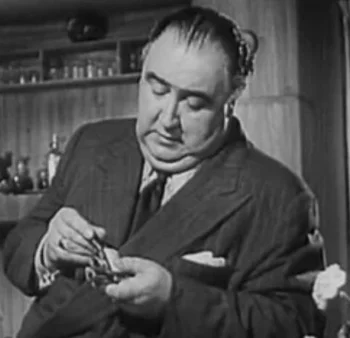
Anselme Payen
January 6, 1795 — May 5, 1871 — Paris, France
Anselme Payen was a French chemist whose meticulous laboratory work reshaped the young science of organic chemistry. He is best remembered for isolating diastase, the first enzyme ever identified, and for discovering cellulose, the structural carbohydrate found in every plant cell wall. His discoveries laid essential groundwork for biochemistry, plant science, and industrial chemistry.
Early Life and Education
Anselme Payen was born on January 6, 1795, in Paris, France, into a family with strong ties to the chemical and industrial world; his father operated a chemical manufacturing business. Growing up amid vats, reagents, and production processes gave young Payen an early, hands-on familiarity with applied chemistry rather than purely theoretical study. He pursued formal scientific training in Paris, immersing himself in the rapidly evolving field of chemistry during a period when the discipline was transitioning from alchemy-influenced practice to rigorous experimental science. Payen showed a particular aptitude for bridging pure research with practical, industrial applications, a trait that would define his entire career. Rather than confining himself to abstract theory, he was drawn to problems with real economic and agricultural significance, such as sugar refining, starch processing, and the chemistry of organic materials. This dual grounding in industry and academic chemistry shaped his approach: he would go on to conduct experiments that were both scientifically rigorous and directly applicable to manufacturing and agriculture, a combination that made him one of the most respected industrial chemists of nineteenth-century France.
Landmark Discoveries
Payen's most celebrated achievement came in 1833, when, working alongside fellow chemist Jean-François Persoz, he isolated a substance from malt extract capable of breaking down starch into sugar. They named this substance diastase, and it became recognized as the first enzyme ever identified and characterized in a laboratory setting, opening the door to the entire field of enzymology. Five years later, in 1838, Payen achieved another milestone when he isolated a fibrous, resistant material from plant tissue that remained after treating wood with various chemical agents. He identified this substance as a distinct compound, which he named cellulose, recognizing it as the fundamental structural component of plant cell walls. This discovery proved foundational not only to organic chemistry but also to botany, materials science, and eventually industries such as papermaking and textiles. Beyond these two landmark findings, Payen conducted extensive research into industrial processes, including sugar beet refining and starch chemistry, and became a professor at the Conservatoire des Arts et Métiers in Paris, where he trained generations of chemists and shared his expertise in applied and industrial chemistry with students and industry professionals alike.
Did You Know?
The cellulose that Anselme Payen isolated in 1838 is now recognized as the most abundant organic compound on Earth, found in the cell walls of virtually all plants. Meanwhile, the diastase enzyme he discovered with Jean-François Persoz in 1833 was the first enzyme ever isolated in a laboratory, launching the entire scientific field of enzymology.
Later Career and Legacy
In recognition of his scientific contributions, Payen was elected to the French Academy of Sciences in 1839, cementing his status among the era's foremost chemists. He continued publishing influential works on industrial and agricultural chemistry throughout his career, addressing topics ranging from sugar production to the chemistry of organic substances used in manufacturing. His research into cellulose proved especially far-reaching, as scientists later confirmed it to be the most abundant organic polymer on Earth, essential to plant biology and countless industrial applications, including paper, textiles, and biofuels. Similarly, his identification of diastase helped establish the conceptual foundation for enzyme science, influencing later researchers who expanded the understanding of biological catalysts. Payen died on May 5, 1871, in Paris, leaving behind a body of work that bridged pure scientific discovery with practical industrial application. Today, he is remembered as a pioneering figure whose careful experimental methods advanced both fundamental chemistry and its real-world applications, with his name permanently linked to two of the most significant substances in organic chemistry: diastase and cellulose.