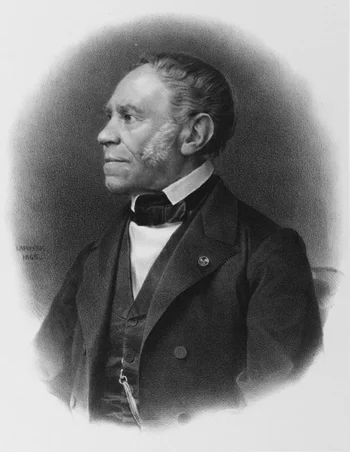
Caspar Peucer
January 6, 1525 — September 25, 1602 — Bautzen, Germany
Caspar Peucer was a German physician, scholar, and reformer of Sorbian origin who became one of the most versatile intellectuals of the Wittenberg Reformation. As son-in-law and close collaborator of Philip Melanchthon, he made significant contributions to medicine, astronomy, and historical chronicle-writing before his controversial theological views led to years of imprisonment.
Early Life and Education
Caspar Peucer was born in 1525 in Bautzen, a town in Upper Lusatia, into a family of Sorbian heritage, a West Slavic ethnic minority in the region. He showed early academic promise and traveled to Wittenberg to study at the university, which had become the intellectual heart of the Protestant Reformation. There he came under the influence of Philip Melanchthon, Martin Luther's closest colleague and one of the era's greatest humanist scholars. Peucer proved an exceptional student, mastering mathematics, astronomy, medicine, and theology with equal facility. His talents so impressed Melanchthon that the elder reformer welcomed him into his household, and in 1550 Peucer married Melanchthon's daughter Magdalena, cementing a personal and intellectual bond that would shape the rest of his career. This connection placed Peucer at the very center of Wittenberg's reformist and scholarly circles during a pivotal period of religious and scientific transformation in Germany.
Career as Scholar and Physician
Peucer's career unfolded largely at the University of Wittenberg, where he first taught mathematics and astronomy before turning to medicine, eventually becoming a professor of medicine and a highly regarded physician. His reputation grew so substantial that he was appointed personal physician to Elector August of Saxony, a position of considerable trust and influence at the Saxon court. Beyond medicine, Peucer distinguished himself as a historian and chronicler, notably continuing and expanding the influential 'Chronicon Carionis,' a world history originally begun by Johannes Carion and revised by Melanchthon. He also produced scholarly work on astronomy and astrology, subjects still deeply intertwined with natural philosophy in the sixteenth century. However, Peucer's theological sympathies increasingly aligned with Calvinist positions on the Eucharist, a stance known as Crypto-Calvinism that put him at odds with strict Lutheran orthodoxy. This theological controversy would soon upend his otherwise distinguished career and place him in direct conflict with the Saxon political and religious establishment.
Did You Know?
Caspar Peucer spent roughly twelve years imprisoned in the fortress of Königstein for his suspected Calvinist sympathies regarding the Eucharist, yet he continued his scholarly work throughout his confinement before being released in 1586 to resume practicing medicine.
Imprisonment, Later Years, and Legacy
In 1574, Peucer's Crypto-Calvinist sympathies led to his arrest on orders of Elector August, who viewed such doctrines as a threat to Lutheran unity in Saxony. Peucer spent roughly twelve years imprisoned, primarily at the fortress of Königstein, enduring harsh conditions while continuing to write and reflect on theology and science. He was finally released in 1586 following a shift in the political and religious climate. After his release, Peucer relocated to the court of Anhalt, serving as physician to the princes there and settling in Dessau, where he continued practicing medicine until his death. He died on September 25, 1602, in Dessau. Peucer's legacy endures through his contributions to Renaissance medicine, his astronomical writings, and his historical chronicles, which remained influential reference works for generations. As a bridge figure between the Lutheran Reformation's founding generation and the emerging scientific and confessional debates of the late sixteenth century, Peucer exemplifies the era's fusion of faith, scholarship, and political peril.