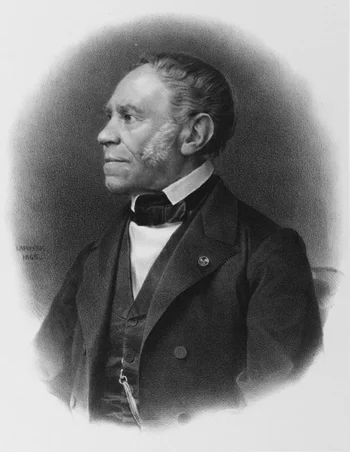
Francis L. Sullivan
January 6, 1903 — November 19, 1956 — London, England
Francis L. Sullivan was an English stage and film actor best remembered for his commanding, often larger-than-life character roles in mid-twentieth-century British cinema. A physically imposing performer with a booming voice, he became one of David Lean's favorite actors, appearing in two of the director's celebrated Dickens adaptations. Sullivan's career spanned the West End stage and Hollywood-adjacent British studio productions until his sudden death in 1956.
Early Life and Stage Beginnings
Francis Loftus Sullivan was born on January 6, 1903, in London, England. He was drawn to the theatre from a young age and began his acting career on the British stage in the early 1920s, quickly distinguishing himself through his substantial physical presence and rich, authoritative voice. These traits made him a natural fit for roles demanding gravitas, menace, or comic pomposity, and theatre producers soon recognized his versatility. Sullivan built a solid reputation in London's West End through the 1920s and 1930s, appearing in a wide range of dramatic and literary adaptations. His stage work included an early and notable portrayal of Agatha Christie's detective Hercule Poirot, helping establish him as an actor capable of embodying complex, memorable characters well before he became a familiar face in cinema. This theatrical grounding shaped the deliberate, larger-than-life style he would later bring to film.
Film Career and Notable Roles
Sullivan transitioned successfully into film, becoming particularly associated with adaptations of Charles Dickens's novels directed by David Lean. He delivered one of his most acclaimed performances as the stern, enigmatic lawyer Jaggers in Lean's 'Great Expectations' (1946), a role that showcased his ability to command the screen with restrained menace. Two years later, he appeared as the cruel workhouse master Mr. Bumble in Lean's 'Oliver Twist' (1948), further cementing his reputation for portraying formidable, morally complicated authority figures. Beyond his Dickensian roles, Sullivan appeared in numerous other British films throughout the 1940s and 1950s, often cast for his imposing stature and theatrical delivery. One of his final screen performances came in Billy Wilder's 'Witness for the Prosecution,' released in 1957, shortly after his death, in which he portrayed a prosecuting counsel. His body of work reflected a career built on strong character parts rather than conventional leading-man roles.
Did You Know?
Francis L. Sullivan's final film, Billy Wilder's 'Witness for the Prosecution,' was released in 1957—after his death in November 1956—meaning many viewers watched his last performance without knowing it would be his last.
Later Years, Death, and Legacy
Sullivan continued working steadily in both film and theatre through the mid-1950s, remaining a respected figure in British entertainment circles. He died suddenly on November 19, 1956, in London, at the age of 53. His death came shortly before the release of 'Witness for the Prosecution,' meaning audiences saw one of his final performances only after he had passed away. Sullivan's legacy endures primarily through his indelible contributions to David Lean's Dickens adaptations, which remain landmark works of British cinema and are still studied and screened today. His portrayal of Jaggers, in particular, is often cited as a highlight of 'Great Expectations' and a benchmark for character-actor performances in literary adaptation. Though he never achieved the widespread fame of leading stars, Sullivan's distinctive presence left a lasting impression on both stage and screen, and he remains fondly remembered by classic film enthusiasts for his ability to bring depth and menace to supporting roles.