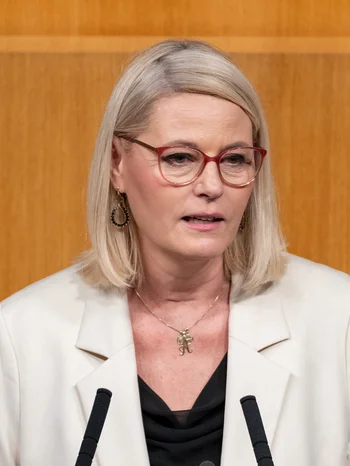
Assia Djebar
June 30, 1936 — February 6, 2015 — Cherchell, Algeria
Assia Djebar was an Algerian novelist, filmmaker, and historian — the first North African woman elected to the Académie française — whose writing about Algerian women's voices, colonial memory, and the intersection of Islamic and Western culture brought her permanent recognition as one of the major literary figures of the 20th century.
Early Life Between Two Languages
Born Fatima-Zohra Imalayen on June 30, 1936, in Cherchell, Algeria (then a French colony), she grew up between two cultures and two languages — Arabic at home and in daily life, French at the colonial school where her father, unusually for the time, insisted she be educated. This bi-cultural upbringing became the founding tension of her literary career. She was the first Algerian woman admitted to the École normale supérieure in Paris (1955), a remarkable achievement at a time when the Algerian war of independence was beginning. She published her debut novel, La Soif (The Thirst, 1957), at age 21 under the pen name Assia Djebar — "Djebar" meaning "consolation" or "consoler" in Arabic.
The Quartet and Cinematic Work
Her most ambitious literary project was the Algerian Quartet — four novels exploring Algerian history and women's experience from the French conquest of 1830 to independence and beyond. L'Amour, la fantasia (Fantasia: An Algerian Cavalcade, 1985) and Ombre sultane (A Sister to Scheherazade, 1987) are the most celebrated volumes: the former braids French military archives of the conquest with oral testimonies of Algerian women, creating a radical document of colonial memory. She also worked as a film director, making two Algerian-language films — La Nouba des femmes du Mont Chenoua (1978), which won the FIPRESCI Prize at the Venice Film Festival — reclaiming women's voices through cinema as well as literature.
Did You Know?
Assia Djebar was elected to the Académie française in 2005 — only the second African writer and the first North African ever elected to that most prestigious of French literary institutions. Her acceptance speech drew directly on the Algerian-French linguistic relationship, describing French as a language she had "adopted" but that had also colonized her family. The election was a profound symbolic moment: the institution of French literary culture formally embracing the writer who most powerfully interrogated the violence that had created that very relationship.
Honors and Lasting Influence
Djebar received the Neustadt International Prize for Literature in 1996 (a prize that frequently predicts Nobel Prizes), the Peace Prize of the German Book Trade in 2000, the International Prize of the Union of Italian Publishers in 2007, and was a perennial Nobel Prize in Literature nominee until her death. She died in Paris on February 6, 2015, at 78. Her translated works remain widely taught in postcolonial literature curricula around the world, and she is regarded as the essential voice of Algerian modernity in fiction — a writer who gave language to the experiences of those who had been systematically silenced.