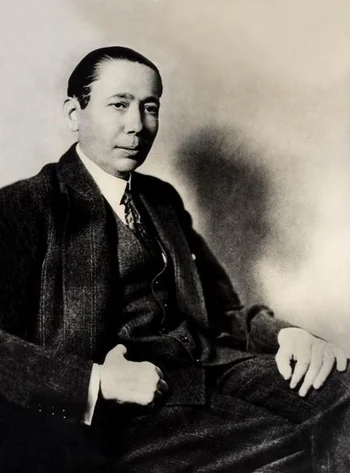
August Bielenstein
March 4, 1826 — 1907 — Courland, Russian Empire (present-day Latvia)
August Johann Gottfried Bielenstein was a Baltic German theologian, linguist, folklorist, and ethnographer whose decades of pastoral work in Courland were matched by groundbreaking scholarship on the Latvian people. Born on March 4, 1826, he became one of the most influential 19th-century researchers of Latvian language, folk life, and settlement history, leaving a body of work still cited by linguists and ethnographers today.
Early Life and Education
August Bielenstein was born on March 4, 1826, into a Baltic German family in the Courland region of what is now Latvia, then part of the Russian Empire. The Baltic German community to which he belonged occupied a distinctive social position, serving for centuries as the landowning, clerical, and professional elite governing a largely Latvian and Estonian peasantry. Bielenstein received a classical education befitting his class before pursuing theological studies at the University of Dorpat (present-day Tartu, Estonia), then the leading center of higher learning in the Baltic provinces. There he trained for the Lutheran ministry, but he also developed the intellectual curiosity about local languages and peoples that would define his life's work. Unlike many of his Baltic German contemporaries, who viewed the Latvian-speaking peasantry primarily through an administrative or religious lens, Bielenstein approached Latvian culture with genuine scholarly interest, treating it as worthy of serious linguistic and ethnographic study. This formative period set him on a path that would combine two seemingly separate vocations: parish ministry and pioneering academic research into the language, folklore, and material culture of the people he served.
Pastoral Career and Scholarly Achievements
After completing his theological training, Bielenstein was ordained as a Lutheran pastor and spent much of his career serving the parish of Doblen (present-day Dobele) in Courland, where he ministered to a largely Latvian-speaking congregation for decades. This close, sustained contact with rural Latvian communities gave him unparalleled access to their spoken language, oral traditions, and daily customs, which he documented with scholarly rigor rare among his peers. His most enduring achievement was his comprehensive grammar of the Latvian language, a work that systematically analyzed Latvian phonetics and morphology and became a foundational text for Baltic linguistics. Beyond grammar, Bielenstein conducted extensive ethnographic research into Latvian folk architecture, settlement patterns, and material culture, producing detailed studies of traditional dwellings and farmsteads. He also investigated the historical boundaries of Latvian settlement and language use, mapping how Latvian-speaking communities related to neighboring linguistic groups across the Baltic region. His work extended into folklore collection as well, documenting songs, customs, and oral traditions that might otherwise have been lost. For these contributions, he earned recognition from learned societies across the Baltic and German-speaking academic world.
Did You Know?
Despite belonging to the Baltic German ruling class that had long dominated Latvian society, Bielenstein devoted his scholarly life to documenting and preserving the Latvian language and folk culture, producing a grammar so thorough it remains a reference point for Baltic linguistics more than a century later.
Later Life and Lasting Legacy
Bielenstein continued his pastoral duties and scholarly pursuits well into old age, remaining a respected figure in both religious and academic circles until his death in 1907. His research occupies a unique place in Baltic intellectual history: as a Baltic German cleric, he stood within a social structure often criticized for its dominance over Latvian society, yet his scholarship helped preserve and legitimize Latvian language and culture at a time when national consciousness among Latvians themselves was beginning to stir. Modern linguists and historians continue to consult his grammatical descriptions and ethnographic surveys as primary sources for understanding 19th-century Latvian dialects, vocabulary, and rural life before industrialization and political upheaval transformed the region. His mapping of Latvian linguistic boundaries remains historically significant for scholars tracing the evolution of Baltic ethnic geography. Bielenstein's dual identity as both theologian and ethnographer exemplifies a broader pattern among Baltic German scholars of his era, many of whom, despite their privileged social position, became unexpected champions of the very cultures their community had long governed. His legacy endures as a bridge figure whose careful documentation preserved invaluable knowledge of Latvian heritage.