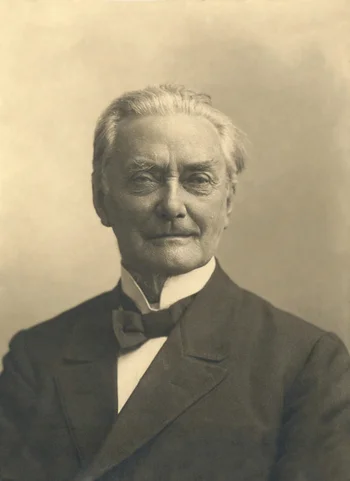
Nicolae Titulescu
March 4, 1882 — March 17, 1941 — Craiova, Romania
Nicolae Titulescu was one of interwar Romania's most accomplished diplomats, serving as ambassador, finance minister, and foreign minister across a distinguished career. He achieved international acclaim as president of the General Assembly of the League of Nations, a role he held for two consecutive terms from 1930 to 1932. His tireless advocacy for collective security and Romanian foreign policy interests made him one of Europe's most respected statesmen of his era.
Early Life and Education
Nicolae Titulescu was born on March 4, 1882, in Romania, into a family that valued education and public service. He pursued legal studies with distinction, eventually earning a doctorate in law that laid the intellectual foundation for his later diplomatic career. His academic brilliance and sharp analytical mind were evident early on, qualities that would later define his approach to international negotiations. Titulescu's education exposed him to both Romanian and broader European legal and political thought, shaping his worldview as an internationalist who believed in the power of diplomacy and multilateral cooperation to resolve conflicts. This grounding in law and rhetoric gave him the tools to become an exceptionally persuasive negotiator. As a young man, he entered public life at a pivotal moment in Romanian history, as the nation sought to consolidate its position in Europe following independence and territorial expansion. His early career combined legal practice with growing political engagement, setting the stage for his rise through the ranks of Romanian government and international diplomacy.
Diplomatic and Political Career
Titulescu's career encompassed multiple critical roles within the Romanian government and on the international stage. He served as Romania's finance minister, where he applied his legal and economic expertise to matters of state fiscal policy, and later became foreign minister, a position from which he shaped Romania's diplomatic relationships across Europe. He also served as ambassador, representing Romanian interests abroad with skill and tact. His most celebrated achievement came through his work with the League of Nations, the international body established after World War I to promote peace and cooperation among nations. Titulescu was elected president of the League's General Assembly, an extraordinary honor that he held for two consecutive terms from 1930 to 1932—a rare distinction reflecting the immense respect he commanded among his peers. In this role, he championed collective security arrangements and worked to strengthen the League's capacity to prevent conflict, particularly advocating for measures that would protect smaller and mid-sized nations like Romania from the aggressive ambitions of larger powers.
Did You Know?
Nicolae Titulescu was elected president of the League of Nations General Assembly for two consecutive terms (1930–1932), an unusual honor that underscored the exceptional trust his fellow diplomats placed in his leadership and negotiating skill.
Legacy and Later Years
Titulescu's later years coincided with the mounting instability that would eventually plunge Europe into the Second World War, a period during which his diplomatic vision of collective security faced increasing strain. Despite his efforts to build lasting alliances and reinforce the League of Nations' authority, the international order he had worked to strengthen ultimately proved unable to prevent the aggression that led to global conflict. He died in 1941, having witnessed the outbreak of the very war he had spent his career trying to avert. Nonetheless, his legacy endures as one of Romania's greatest diplomats and a passionate advocate for international law and multilateral cooperation. Streets, institutions, and honors across Romania bear his name today, and historians continue to study his speeches and negotiations as exemplars of skilled interwar diplomacy. Titulescu is remembered not only for his personal brilliance but for embodying the hopeful, if ultimately fragile, vision of a world governed by collective security rather than unilateral power.