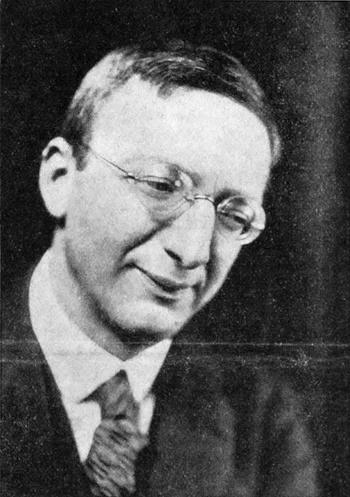
Camillo Benso, Count of Cavour
August 10, 1810 — June 6, 1861 — Turin, Piedmont-Sardinia (now Italy)
Camillo Benso, Count of Cavour, was the Piedmontese statesman who served as Prime Minister of Piedmont-Sardinia and engineered the Risorgimento — the unification of Italy — through diplomatic brilliance, strategic military alliances, and a talent for managing France's Napoleon III that created the conditions for a unified Italian state, a goal he achieved before dying at age fifty.
The Practical Mind Behind the Dream
Born in Turin on August 10, 1810, Cavour was the second son of an aristocratic Piedmontese family with French cultural connections. He served briefly as a military officer, then turned to agriculture, economics, and journalism. He helped found the newspaper Il Risorgimento in 1847, which gave the movement for Italian unification its name. Elected to the Piedmontese parliament in 1848, he rapidly rose to prominence and became Prime Minister of Piedmont-Sardinia in 1852. His governing philosophy was pragmatic liberalism: constitutional government, economic modernization, free trade, and church-state separation — the kind of administrative modernization that would make Piedmont an attractive center of gravity for other Italian states.
The Alliance with France and the Wars of Unification
Cavour understood that Piedmont could not defeat Austria — which controlled Lombardy and Venetia — without a great-power ally. He spent years cultivating Napoleon III of France, sending Piedmontese troops to fight in the Crimean War (1853-56) specifically to establish Piedmont as a European power worth supporting. At Plombières in 1858, he secretly negotiated French military support for a war against Austria in exchange for ceding Nice and Savoy to France. The resulting Second Italian War of Independence in 1859 won Lombardy. He then navigated the complex political situation created by Giuseppe Garibaldi's brilliant but unauthorized conquest of the Kingdom of the Two Sicilies in 1860 — using the crisis as an opportunity to annex central and southern Italy while limiting Garibaldi's independence. The Kingdom of Italy was proclaimed in March 1861.
Did You Know?
Camillo Cavour died on June 6, 1861 — just three months after the Kingdom of Italy was formally proclaimed. He had worked himself to exhaustion managing the final stages of unification and became seriously ill with fever in late May. He reportedly said on his deathbed: "Italy is made. Everything is safe." His last conversation with his confessor included the observation that without God's mercy he would not want to die — an unusual expression of spiritual humility from the man who had spent his career limiting the Pope's political power in Italy. He was fifty years old.
The Architect Italy Almost Forgot
Cavour died on June 6, 1861, before he could shape the new Italian state he had been instrumental in creating. In popular memory, Italian unification is often associated with the heroic Garibaldi, the nationalist Mazzini, and later the king Victor Emmanuel II — but historians consistently identify Cavour as the figure whose diplomatic skill made the unification possible and sustainable. He secured the alliances, managed the compromises, and established the constitutional precedents. Without his fifteen years as Piedmont's prime minister, the Risorgimento is a dream rather than a state. Italy named streets, squares, and towns after him across the peninsula he spent his life trying to unite.