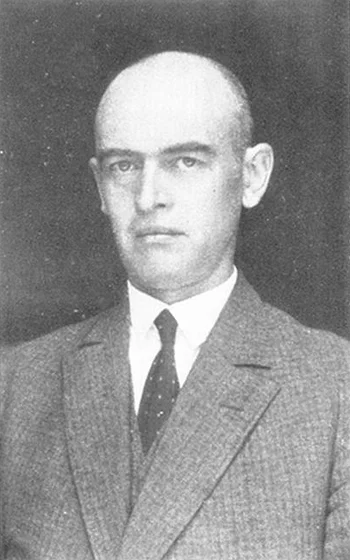
Chester B. Bowles
April 5, 1901 — May 25, 1986 — Springfield, Massachusetts
Chester Bliss Bowles was an American advertising executive, politician, and diplomat who moved from building one of America's most successful advertising agencies to serving as Governor of Connecticut, US Ambassador to India, and Undersecretary of State. A committed liberal, he was consistently skeptical of Cold War militarism and argued for a foreign policy centered on economic development, diplomacy, and engagement with the non-aligned world — positions that put him at odds with the Kennedy and Johnson administrations' more hawkish advisers but that history has often vindicated.
Advertising and Public Service
Born on April 5, 1901, in Springfield, Massachusetts, Bowles graduated from Yale in 1924 and co-founded the advertising agency Benton and Bowles with William Benton in 1929. The firm became one of the most successful in the country, pioneering radio advertising and representing major national brands. Bowles left the agency in the early 1940s and moved into public service. During World War II he served as head of the Office of Price Administration, managing price controls across the wartime economy. He was elected Governor of Connecticut in 1948 and served one term, establishing himself as a leading liberal Democrat. President Truman appointed him as US Ambassador to India, his first of two tours in that role, and he became deeply engaged with South Asian affairs.
Cold War Dissent and India
Bowles's deep knowledge of India and his sympathy with Third World nationalism made him a persistent voice for a less militaristic, more development-focused American foreign policy. He believed that the United States was making a strategic error by prioritizing military containment over economic engagement in the developing world. During the Kennedy administration, where he served as Undersecretary of State, his cautious counsel on the Bay of Pigs invasion and his general skepticism of interventionism put him at odds with the more activist elements of the administration. He was eventually reassigned to India as ambassador for a second tour (1963–69), where he did meaningful work promoting agricultural development during a critical period for Indian food security. He was a prolific writer and speaker on American foreign policy throughout his life.
Did You Know?
Bowles was reportedly one of the few Kennedy administration officials who raised serious concerns about the Bay of Pigs invasion plan before it was launched — concerns that were largely ignored and that proved entirely correct.
Legacy
Chester Bowles died on May 25, 1986. His career embodied the mid-century American liberal tradition at its most cosmopolitan — a belief that American power should be used to promote development and diplomacy rather than simply to contain Communism. His instincts about Vietnam, India, and the limits of military power were often ahead of mainstream American policy thinking. He is remembered as a model of principled public service and as one of the most thoughtful American voices on foreign policy in the Cold War era.