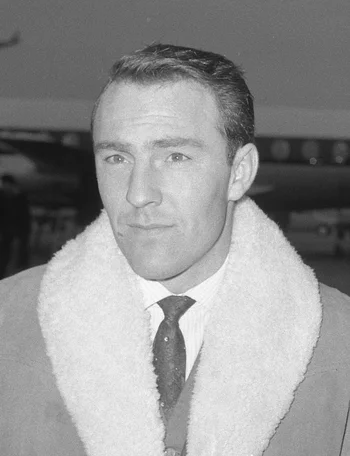
Frederick Crews
February 20, 1933 — June 21, 2024 — New Haven, Connecticut
Frederick Crews was an American literary critic, essayist, and professor emeritus of English at the University of California, Berkeley — a scholar who began his career as an enthusiastic Freudian critic, dramatically reversed course to become one of psychoanalysis's most incisive scholarly critics, and spent decades subjecting Sigmund Freud's claims to the standards of scientific evidence they had never received.
From Freudian Believer to Skeptic
Born on February 20, 1933, in New Haven, Connecticut, Crews studied literature at Yale and Princeton before joining the faculty at UC Berkeley, where he would spend his entire academic career. His early scholarship was explicitly Freudian: his 1962 book The Sins of the Fathers: Hawthorne's Psychological Themes applied psychoanalytic interpretation to Nathaniel Hawthorne's fiction in ways typical of mid-century literary criticism. He also wrote the popular parody The Pooh Perplex (1963), a send-up of academic literary criticism that demonstrated his satirical gifts alongside his scholarly ones. But through the 1960s and 1970s, Crews grew increasingly skeptical of the evidentiary basis of Freudian theory.
The Skeptical Turn and Memory Wars
Crews's intellectual turn against Freud accelerated in the 1990s, when he wrote a highly influential series of essays for The New York Review of Books that examined the "recovered memory" movement — therapists who claimed to help patients "recover" previously repressed memories of childhood sexual abuse — and traced its intellectual roots back to Freudian concepts of repression that he argued had no scientific basis. The essays sparked enormous controversy in both academic and popular culture. He expanded these critiques in books including The Memory Wars: Freud's Legacy in Dispute (1995) and the comprehensive, exhaustively researched Freud: The Making of an Illusion (2017), which argued that Freud had systematically fabricated or distorted his clinical case studies.
Did You Know?
Frederick Crews's intellectual journey — from practicing Freudian literary critic to one of Freud's harshest scholarly critics — is one of the more remarkable self-revisions in modern academic life. He did not simply grow skeptical of one application of psychoanalysis; he concluded that the entire Freudian enterprise rested on fabricated case studies, post-hoc rationalization, and the systematic suppression of evidence. His willingness to publicly repudiate the framework he had once championed, and to do so with meticulous scholarly rigor over decades, earned him respect even from those who disagreed with his conclusions.
Legacy and Influence
Crews's critique of Freud contributed significantly to the broader reassessment of psychoanalysis that occurred in academic psychology and psychiatry from the 1980s onward, as evidence-based practices replaced psychodynamic approaches in clinical training. His work also influenced how literary criticism engaged with psychoanalytic theory — his mockery of credulous Freudian interpretation in The Pooh Perplex had been prescient about tendencies that later became far more problematic. He died on June 21, 2024, in Berkeley, California, at age 91, having spent a long career exemplifying the kind of rigorous intellectual honesty — including the willingness to change one's mind on fundamental questions — that academic inquiry demands at its best.