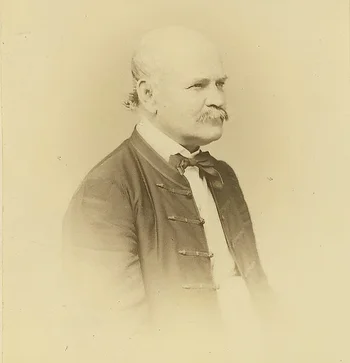
Gottfried Wilhelm Leibniz
July 1, 1646 — Leipzig, Electorate of Saxony
Gottfried Wilhelm Leibniz was a German polymath — mathematician, philosopher, scientist, and diplomat — who stands among the greatest intellects in history. He independently developed calculus (alongside Isaac Newton), invented binary arithmetic that underlies modern computing, and constructed a major philosophical system while serving European courts and engaging with nearly every domain of knowledge in his era. He has been called the last "universal genius."
Early Life and Prodigious Education
Born on July 1, 1646, in Leipzig, Leibniz was the son of a philosophy professor who died when Gottfried was six. The boy taught himself Latin from his father's library and enrolled at the University of Leipzig at age fifteen. He was refused a doctorate there because of his youth, moved to the University of Altdorf, and was awarded his doctorate in law at twenty. By his early twenties he was already corresponding with Europe's leading scholars and proposing ambitious projects of intellectual unification. In 1672 he moved to Paris, where contact with Dutch mathematician Christiaan Huygens sparked his intensive study of mathematics, ultimately producing his independent development of calculus by the mid-1670s.
Mathematics, Logic, and Science
Leibniz's mathematical contributions were transformative. His notation for calculus — including the integral sign ∫ and the derivative notation d/dx — is the form still used today, preferred over Newton's notation worldwide. He also developed binary arithmetic, the base-2 number system that underpins all modern digital computers, and made major advances in combinatorics, topology, and probability theory. In logic he envisioned a "universal calculus" of reasoning that anticipated symbolic logic by two centuries. In physics he argued against Newton's absolute space and time, prefiguring Einstein's relativity, and his concept of "monads" as fundamental units of reality influenced German idealism and continues to generate philosophical debate.
Did You Know?
Leibniz invented one of the first mechanical calculators — the Leibniz wheel — capable of performing all four arithmetic operations including multiplication and division, a significant advance over Pascal's earlier adding machine.
Philosophy and Legacy
As a philosopher, Leibniz argued that we live in "the best of all possible worlds" — a claim Voltaire famously satirized in Candide. He also proposed the principle of sufficient reason (nothing happens without a cause) and the principle of the identity of indiscernibles. He died in November 1716, largely unrecognized at the end of his life. Posterity has been far kinder: Leibniz is now ranked alongside Aristotle, Descartes, and Kant as one of the foundational figures in Western philosophy, and his mathematical innovations shaped the modern world more deeply than almost anyone of his era.