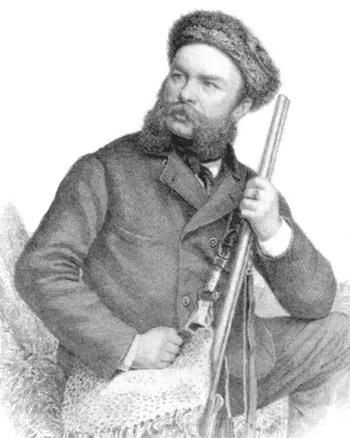
Henrik Ibsen
March 20, 1828 — May 23, 1906 — Norway
Henrik Ibsen is universally regarded as the father of modern drama. His realistic plays, which put the social and psychological lives of ordinary middle-class people on stage and refused tidy moral resolutions, broke decisively from the well-made theatrical tradition and established the grammar of modern theater. A Doll's House, Ghosts, Hedda Gabler, and The Master Builder remain among the most performed plays in the world.
Early Life and Norwegian Theater
Born March 20, 1828 in Skien, Norway, Ibsen grew up in poverty after his father's bankruptcy — a financial catastrophe that shame and social judgment shadowed throughout his writing. He worked as an apothecary's assistant, wrote poetry, and eventually made his way into the theater, working as a stage manager and then resident playwright in Bergen and Christiania (Oslo). His early historical and verse plays attracted some attention in Scandinavia but found little international audience. Financial failure and critical indifference drove him to self-impose a twenty-seven-year exile in Italy and Germany, where he wrote his mature masterpieces.
The Modern Breakthrough
Ibsen's realistic social dramas began with The Pillars of Society (1877) and achieved international notoriety with A Doll's House (1879) — in which Nora Helmer slams the door on her marriage and walks out, refusing her roles as wife and mother. The play's ending caused outrage across Europe, with theaters in some countries demanding Ibsen rewrite it with a happy ending (he briefly did for Germany). Ghosts (1881) tackled syphilis and the legacy of sin within families, provoking mass condemnation; Hedda Gabler (1890) created one of drama's most complex and terrifying female characters. His late "chamber plays" — especially The Master Builder and When We Dead Awaken — entered a more symbolic, introspective mode that prefigured expressionism. His major plays are essential reading for anyone interested in theater.
Did You Know?
When Ibsen returned to Norway in 1891 after twenty-seven years abroad, he was treated as a national hero but remained personally reclusive. His daily routine in Christiania was so predictable that local residents set their watches by his morning walk to the café. He suffered a stroke in 1900 and another in 1901; when he died in 1906, his last reported words were "Tvertimod!" — "On the contrary!" — in response to a nurse who said he seemed to be improving.
Legacy
Ibsen died on May 23, 1906, in Christiania. His influence on theater is second only to Shakespeare in scope and depth. The naturalistic conventions he established — realistic sets, contemporary settings, psychological depth, social criticism — became the defaults of modern theatrical practice. Playwrights from Shaw and Chekhov to O'Neill and Miller have credited him as their foundational model. His refusal to provide moral comfort, and his insistence that audiences face the realities of marriage, class, and disease without theatrical resolution, changed what drama is allowed to say.