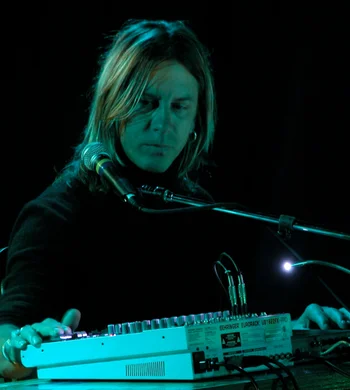
Ian McDonald
June 25, 1946 — November 9, 2022 — Osterley, Middlesex, England
Ian Richard McDonald was an English composer and multi-instrumentalist whose musicianship helped launch two of rock's most influential bands. As a founding member of King Crimson in 1968, he was central to crafting the progressive rock landmark 'In the Court of the Crimson King,' and in 1976 he co-founded the hard rock band Foreigner, contributing to a string of chart-topping hits. His rare versatility across saxophone, flute, keyboards, and guitar made him one of rock's most valuable session and studio architects.
Early Life and Musical Training
Ian McDonald was born on June 25, 1946, in Osterley, Middlesex, England. He developed an early love of music and multiple instruments, eventually mastering saxophone, flute, clarinet, keyboards, and guitar—a versatility that would define his career. As a young man, McDonald joined the British Army, where he served as a musician, an experience that sharpened his technical skill and discipline as a performer. This military musical training gave him a strong grounding in composition and arrangement, skills he would later bring to bear on some of rock's most ambitious recordings. By the late 1960s, having left the army, McDonald immersed himself in London's vibrant music scene, where progressive and psychedelic rock were beginning to take shape. His broad instrumental palette and formal musical background set him apart from many of his rock contemporaries, positioning him to become an architect of a new, more symphonic style of rock music that blended jazz, classical, and rock influences into something wholly original.
King Crimson and the Birth of Progressive Rock
In 1968, Ian McDonald became a founding member of King Crimson alongside Robert Fripp, Michael Giles, Greg Lake, and lyricist Peter Sinfield. McDonald was the band's principal composer and arranger on its debut album, 'In the Court of the Crimson King' (1969), playing saxophone, flute, mellotron, and clarinet while co-writing much of the material, including the iconic title track and 'Epitaph.' The album is widely regarded as a founding document of progressive rock, praised for its dramatic dynamics and orchestral ambition. McDonald left King Crimson shortly after the album's release, reportedly due to touring fatigue and creative differences. He briefly reunited with drummer Michael Giles to record the album 'McDonald and Giles' (1971). Throughout the 1970s, McDonald worked as a session musician and producer, contributing to recordings by artists such as T. Rex and producing albums for bands like Fireballet. In 1976, he co-founded Foreigner with Mick Jones, playing keyboards, guitar, and woodwinds on the band's multi-platinum debut album and its hit-laden follow-ups, including songs like 'Cold as Ice' and 'Feels Like the First Time.' He left Foreigner in 1980 to pursue solo and production work.
Did You Know?
Ian McDonald wrote or co-wrote almost every track on King Crimson's groundbreaking debut album 'In the Court of the Crimson King,' yet he left the band before its first major tour was complete—only to help launch Foreigner, another platinum-selling powerhouse, just seven years later.
Later Career, Reunions, and Legacy
After departing Foreigner, McDonald continued to work as a producer, session musician, and occasional performer. He reconnected with his progressive rock roots by performing with the 21st Century Schizoid Band in the late 1990s and 2000s, a group formed by former King Crimson members to perform the band's early material live. In 2017 and 2018, McDonald rejoined King Crimson for touring performances, bringing his original compositions full circle nearly five decades after he had first written them, delighting longtime fans with his participation in the band's celebrated three-drummer lineup. Ian McDonald died on November 9, 2022, in New York City at the age of 76. His legacy rests on his rare dual achievement: helping originate progressive rock's ambitious, genre-blending sound with King Crimson, then later helping define the polished, radio-friendly hard rock sound of Foreigner. Musicians and critics alike remember him as a uniquely gifted multi-instrumentalist and composer whose fingerprints are audible on some of rock's most enduring and beloved recordings.