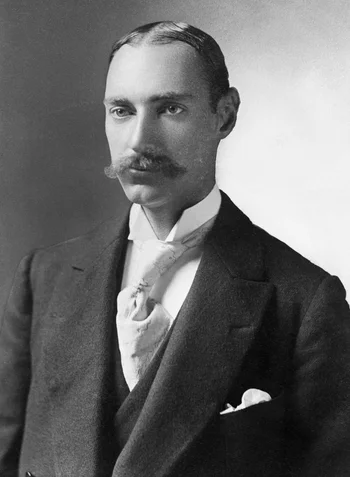
Jack Kemp
July 13, 1935 — May 2, 2009 — Los Angeles, California, United States
Jack French Kemp lived two distinct public lives: one as a star professional quarterback and another as an influential conservative statesman. After a successful career in the American Football League, he reinvented himself as a congressman, cabinet secretary, and national political figure who championed supply-side economics and served as the Republican vice presidential nominee in 1996.
From the Gridiron to the Locker Room of Politics
Jack Kemp was born on July 13, 1935, in Los Angeles, California, and grew up with a passion for football that carried him to Occidental College, where he studied physical education and played quarterback. Undrafted by the NFL, he found his footing in the fledgling American Football League, spending most of his playing career with the Buffalo Bills. Kemp became one of the AFL's marquee players, leading the Bills to two league championships and earning MVP honors in 1965. He also served in the U.S. Army Reserve during this period, balancing military duty with his athletic career. Off the field, Kemp helped found the AFL Players Association and served as its president, an early sign of the leadership and political instincts that would define his later career. His time as a professional athlete gave him a public profile and a base of support in Western New York that he would later leverage when he turned to electoral politics, a transition that was unusual but not unprecedented for star athletes of his era.
Congress and the Champion of Supply-Side Economics
Kemp parlayed his football fame into a political career, winning election to the U.S. House of Representatives from a Buffalo-area district in 1970 and serving nine terms from 1971 to 1989. As a congressman, he became one of the most vocal proponents of supply-side economics, arguing that lower marginal tax rates would spur economic growth. He co-authored the Kemp-Roth Tax Cut, a proposal that influenced the Reagan administration's landmark 1981 tax cuts and helped shape the broader conservative economic agenda of the 1980s. Kemp sought the Republican presidential nomination in 1988 but was unsuccessful, finishing behind eventual nominee George H. W. Bush. Rather than fading from national politics, Kemp was appointed by Bush to serve as the ninth U.S. Secretary of Housing and Urban Development, a post he held from 1989 to 1993. There, he promoted policies aimed at empowering low-income residents through homeownership and tenant management of public housing, reflecting his broader belief that conservative economic principles could be applied to urban poverty and opportunity.
Did You Know?
Before entering politics, Jack Kemp was a two-time AFL champion quarterback with the Buffalo Bills and won the league's MVP award in 1965. He also helped found the American Football League Players Association, serving as its president—an early example of the coalition-building skills he would later bring to Congress.
National Ticket and Lasting Influence
In 1996, Kemp reached the pinnacle of national politics when Republican presidential nominee Bob Dole selected him as his running mate. The Dole-Kemp ticket campaigned on tax cuts and economic growth but lost to the Democratic incumbents, Bill Clinton and Al Gore. Despite the defeat, Kemp remained a respected voice within the Republican Party, known for his optimistic brand of conservatism and his efforts to broaden the party's appeal, including outreach to minority communities on issues of economic opportunity. After leaving elected office, he continued to advocate for free-market policies and civil rights through various think tanks and foundations. Kemp died on May 2, 2009, after a battle with cancer, at his home. He left behind a legacy as a rare figure who bridged professional athletics and high-level statesmanship, and as an intellectual architect of the tax-cutting philosophy that shaped Republican economic policy for decades. His combination of athletic charisma and policy conviction made him one of the more distinctive political figures of the late 20th century.