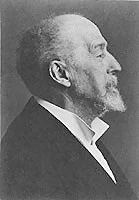
John Jacob Astor IV
July 13, 1864 — April 15, 1912 — Rhinebeck, New York, United States
John Jacob Astor IV was an American business magnate, real estate developer, inventor, and writer who belonged to the illustrious Astor and Livingston families. As the richest passenger aboard RMS Titanic, his death when the ship sank on April 15, 1912, shocked the world and became one of the most enduring symbols of the disaster. At the time of his death, his fortune of roughly $87 million made him one of the wealthiest people on Earth.
Early Life and Family Heritage
John Jacob Astor IV was born on July 13, 1864, in Rhinebeck, New York, into one of America's most powerful and wealthy dynasties. He was a great-grandson of German-American fur trader and businessman John Jacob Astor, who had built the family's original fortune, and he also descended from the prominent Livingston family through his maternal line. Raised amid immense privilege, Astor received a rigorous education, attending St. Paul's School in Concord, New Hampshire, before graduating from Harvard University in 1888. From a young age, he was groomed to manage and expand the vast Astor real estate empire, which included numerous hotels and properties throughout New York City. His upbringing instilled in him both a sense of business acumen and a fascination with invention and technology, interests that would define much of his adult life alongside his management of the family's extensive holdings.
Business Ventures, Inventions, and Military Service
Astor expanded the family's real estate empire significantly, most notably developing the Astoria Hotel, which was later combined with his cousin's Waldorf Hotel to form the famous Waldorf-Astoria in Manhattan. Beyond real estate, he was an inventive mind, patenting several devices including a bicycle brake, a vibratory disintegrator for pulverizing ore, and improvements to internal combustion engines. He also wrote a science fiction novel, "A Journey in Other Worlds" (1894), which imagined futuristic technology and space travel. When the Spanish-American War broke out in 1898, Astor demonstrated his patriotism by donating an artillery battery to the U.S. Army and serving as a lieutenant colonel, funding and equipping troops at his own expense. His diverse pursuits reflected a restless, entrepreneurial spirit that extended well beyond the traditional confines of his family's real estate business, marking him as both an innovator and a man of considerable public service.
Did You Know?
Before his death aboard the Titanic, John Jacob Astor IV wrote a science fiction novel called "A Journey in Other Worlds" (1894), which predicted future technologies such as television, air conditioning, and space travel to Saturn and Jupiter. He was also a skilled inventor, holding patents for devices ranging from a bicycle brake to an ore pulverizer.
The Titanic Disaster and Lasting Legacy
In 1912, Astor was returning from a European honeymoon with his second wife, Madeleine, aboard the RMS Titanic when the ship struck an iceberg on the night of April 14 and sank in the early hours of April 15. As the richest man aboard, Astor reportedly helped his pregnant wife into a lifeboat but was denied a seat himself under the strict "women and children first" protocol enforced by the crew. He died in the sinking, one of 1,496 passengers and crew who perished, and his body was later recovered by a cable ship and identified by the items in his pockets. His death sent shockwaves through American and international society, given his fame and fortune, and cemented his place as one of the most recognized victims of the disaster. Astor's estate, valued at roughly $87 million, was distributed among his heirs, and his story continues to be retold in books and films about the Titanic, symbolizing the disaster's indiscriminate toll on even the wealthiest and most powerful figures of the Gilded Age.