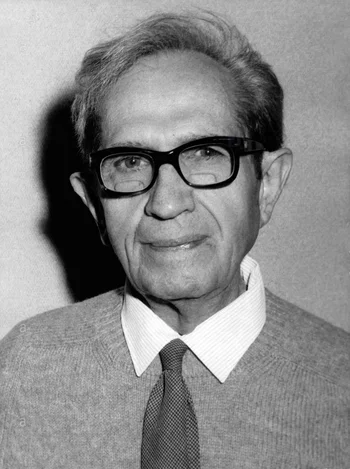
Jorge Luis Borges
August 24, 1899 — June 14, 1986 — Argentina
Jorge Luis Borges is the most influential Latin American author of the twentieth century — a short-story writer, essayist, and poet whose compact, cerebral fictions about infinite libraries, branching realities, labyrinths, and the nature of time transformed what literature could do. Though he never won the Nobel Prize (a persistent literary scandal), he influenced a generation of writers worldwide, from Gabriel García Márquez to Umberto Eco.
Buenos Aires and the Bilingual Childhood
Jorge Francisco Isidoro Luis Borges Acevedo was born on August 24, 1899 in Buenos Aires, Argentina, into a family that blended Argentine and English ancestry. His father, who had English antecedents, was a lawyer and amateur philosopher with extensive personal library; his grandmother was English-born and spoke English at home. Borges was bilingual from childhood, learning to read English before Spanish, and was educated partly in Geneva and later in Spain, where he became involved in the Ultraismo literary movement. He returned to Argentina in 1921 and began publishing intensely. Already suffering from deteriorating eyesight — a hereditary condition that would eventually render him completely blind — he continued to read and write prolifically, increasingly from memory and by dictation.
The Fictions
Borges's mature work is concentrated in two short collections: Ficciones (1944) and El Aleph (1949). The stories in these books — "The Library of Babel," "The Garden of Forking Paths," "Tlön, Uqbar, Orbis Tertius," "The Aleph," "Pierre Menard, Author of the Quixote" — are typically framed as literary criticism, encyclopedia entries, or reports, hiding their philosophical content in ironic scholarly form. Their concerns are the structure of infinite possibility, the relationship between maps and territories, the nature of identity over time, and the paradoxes of authorship and influence. Many are only a few pages long. Their density of idea per page is extraordinary, and their influence on postmodernism, magic realism, and speculative fiction has been incalculable. His collected works reward decades of reading.
Did You Know?
Borges was appointed director of the National Library of Argentina in 1955 — the same year his eyesight failed completely, leaving him unable to read ordinary print. He called the irony "the magnificent irony of God": he had become the director of a library of nearly a million books at the precise moment he lost the ability to read them. He continued to write by dictation and from memory, and the blindness appears as a motif throughout his late work.
Legacy
Borges never won the Nobel Prize, repeatedly passing over in circumstances that were widely attributed to his political views and the Swedish Academy's politics of the era. He died on June 14, 1986 in Geneva — a city he had loved since his education there — and is buried in the Plainpalais cemetery. His work has never gone out of print and has never ceased to generate new readings. Virtually every major postmodern novelist — Eco, Pynchon, Calvino, Coetzee, García Márquez — has acknowledged his influence. The word "Borgesian" has entered critical vocabulary as an adjective describing any fiction mixing scholarship, infinity, and metaphysical paradox.