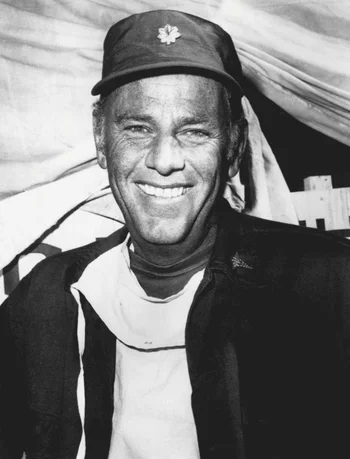
Joseph McCarthy
November 14, 1908 — May 2, 1957 — United States
Joseph McCarthy was a U.S. Senator from Wisconsin whose name became synonymous with anti-communist witch hunts. His unsubstantiated accusations against hundreds of public figures — military officers, academics, and government officials alike — created a climate of fear and suspicion in 1950s America that left a lasting mark on civil liberties and political culture.
Rise to Power
Born on November 14, 1908 in Grand Chute, Wisconsin, McCarthy worked as a circuit court judge before serving with the Marine Corps in the Pacific during World War II. He won a Senate seat in 1946 by questionably implying an opponent was soft on communism. For his first three years in office he was a largely unremarkable senator. That changed on February 9, 1950, when he delivered a speech in Wheeling, West Virginia, claiming to hold a list of known communists still employed by the State Department. The speech made national headlines overnight and launched his career as America's premier anti-communist crusader.
The Reign of Fear
McCarthy leveraged his chairmanship of a Senate investigative subcommittee to pursue alleged communists across government and cultural life. Witnesses were summoned, reputations were destroyed, and the term "McCarthyism" — coined as a criticism — entered the dictionary. The Hollywood blacklist, the loyalty oaths, and the systematic dismissals of thousands of public employees reflected an era in which accusation alone carried devastating consequences. His tactics remained largely unchallenged until he took on the U.S. Army in televised hearings in 1954. Army counsel Joseph Welch's famous rebuke — "Have you no sense of decency?" — began to turn the tide of public opinion.
Did You Know?
Despite McCarthy's constant claims about lists of known communists, he never produced a single verified list, and his own subcommittee failed to establish a single confirmed case of Soviet espionage through his investigations. His Senate colleagues ultimately voted 67–22 to censure him in December 1954.
Fall and Legacy
After the censure, McCarthy lost his committee chairmanship and much of his influence. He died on May 2, 1957, at the age of 48, from hepatitis — a condition worsened by heavy drinking. Although his specific use of communist accusations faded, McCarthyism endures as a concept describing the practice of making sweeping, unsubstantiated accusations to suppress dissent. The period remains a watchword for the dangers of unchecked political demagoguery and their corrosive effects on democratic norms.