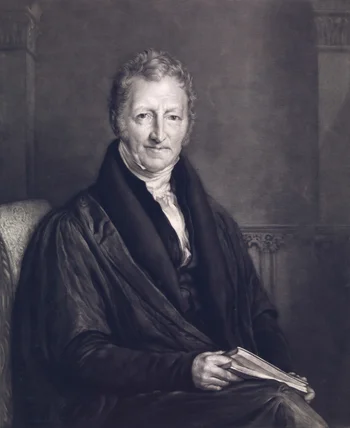
Marian Dawkins
February 13, 1945 — United Kingdom
Marian Stamp Dawkins is a British biologist and professor of ethology at the University of Oxford whose work has profoundly shaped the scientific study of animal welfare. Blending rigorous behavioural science with philosophical questions about consciousness, she has spent decades investigating what animals perceive, feel, and need. Her research has influenced both academic thinking and practical policy on how animals are treated.
Early Life and Education
Marian Stamp Dawkins was born on February 13, 1945, in Britain, at a time when the scientific study of animal behaviour was only beginning to establish itself as a serious discipline. She pursued her education with a strong interest in biology and behaviour, eventually finding her way to the University of Oxford, which was then emerging as a global center for ethology under the influence of pioneering figures like Niko Tinbergen. Oxford's intellectual environment, rich with debate about instinct, learning, and the evolutionary basis of behaviour, proved formative for her development as a scientist. She trained in a period when questions about animal minds were often dismissed as unscientific speculation, yet she was drawn precisely to these difficult questions. Her early academic work laid the foundation for a career that would challenge assumptions about what could be known about non-human experience. Rather than shying away from the complexity of animal consciousness, she embraced it as a legitimate and pressing area of inquiry, setting the stage for a lifetime of research that would bridge biology, psychology, and philosophy. This grounding at Oxford also connected her to a network of scholars who valued empirical rigor combined with bold theoretical questions, a combination that would define her subsequent career.
Academic Career and Research
Dawkins became a professor of ethology at the University of Oxford, where she built an influential research program spanning several interconnected areas. Her studies of vision in birds revealed how differently animals perceive their environments compared to humans, work with significant implications for understanding animal behaviour in captivity and the wild. She also examined animal signalling and behavioural synchrony, exploring how creatures communicate and coordinate actions within groups. Perhaps most notably, Dawkins became a leading voice in the scientific investigation of animal consciousness, tackling the profound and contested question of whether, and how, animals experience subjective states. This work fed directly into her pioneering research on animal welfare, where she developed methods for assessing what animals themselves indicate they need and prefer, rather than relying solely on human assumptions. Her approach combined careful experimental design with a willingness to ask philosophically challenging questions, helping to legitimize animal welfare science as a rigorous academic field. She authored influential books and papers that argued animal welfare could and should be studied using objective scientific methods, giving policymakers and industry practical tools grounded in evidence rather than sentiment alone.
Did You Know?
Marian Dawkins developed methods allowing animals to essentially 'vote with their feet' or effort, using preference and motivation tests to reveal what conditions animals themselves find most rewarding or aversive, turning subjective animal experience into measurable scientific data.
Legacy and Impact
Marian Dawkins's contributions have left a lasting mark on both the scientific community and broader public discourse about how humans treat animals. By insisting that questions of animal consciousness and welfare could be studied empirically, she helped transform animal welfare science from a marginal concern into a respected academic discipline. Her research has informed international standards and practices in agriculture, laboratory research, and conservation, giving concrete scientific backing to efforts aimed at reducing animal suffering. Generations of students and researchers at Oxford and beyond have been shaped by her rigorous yet open-minded approach to studying animal minds. Her work continues to be cited in debates over animal sentience legislation and welfare standards worldwide, reflecting her lasting influence on policy as well as academia. Beyond her specific findings, Dawkins's greatest legacy may be methodological: she demonstrated that difficult, once-taboo questions about subjective animal experience could be approached with the same rigor as any other scientific inquiry, paving the way for an entire field of research that continues to grow in importance as society reconsiders its relationship with other species.