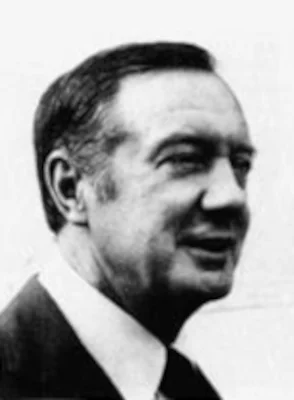
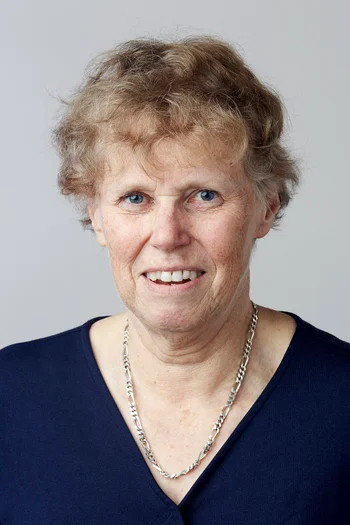
Thomas Robert Malthus
February 13, 1766 — December 29, 1834 — Westcott, near Dorking, Surrey, England
Thomas Robert Malthus was an English economist, Anglican cleric, and scholar whose ideas on population growth transformed political economy and demography. Best known for his 1798 essay warning that population would inevitably outpace food supply, he became one of the most influential and controversial thinkers of his era. His theories later helped inspire Charles Darwin's and Alfred Russel Wallace's theories of natural selection.
Early Life and Education
Thomas Robert Malthus was born on February 13, 1766, near Guildford, Surrey, England, the sixth of eight children in a comfortable, intellectually engaged household. His father, Daniel Malthus, was a friend of the philosopher David Hume and the writer Jean-Jacques Rousseau, and he ensured his son received a rigorous education. Malthus was tutored privately before entering Jesus College, Cambridge, in 1784, where he studied a wide range of subjects but excelled particularly in mathematics. He graduated in 1788 with honors and was elected a fellow of Jesus College in 1793. Despite a cleft lip and palate that affected his speech, he pursued ordination in the Church of England, becoming a curate in Okewood, Surrey, in 1789. His early years combined clerical duties with a growing fascination with philosophy, economics, and the social debates of the late eighteenth century, particularly discussions about human progress, poverty, and the perfectibility of society that were then popular among Enlightenment thinkers such as William Godwin and the Marquis de Condorcet.
The Essay on Population and Major Works
In 1798, Malthus anonymously published "An Essay on the Principle of Population," a work written partly as a rebuttal to the utopian optimism of Godwin and Condorcet. Malthus argued that population, when unchecked, grows geometrically while food production increases only arithmetically, inevitably leading to famine, disease, and poverty unless checked by factors such as war, delayed marriage, or moral restraint. The essay caused immediate controversy and went through six editions, each more heavily researched and revised, incorporating demographic data Malthus gathered from travels across Europe. In 1805, he became Professor of History and Political Economy at the East India Company College in Hertfordshire, reportedly the first such academic post in England, a role he held until his death. He also engaged extensively with contemporaries including David Ricardo, with whom he debated trade, rent, and value theory, and he wrote on the Corn Laws, rent, and economic crises. His population principle became foundational to classical economics and directly influenced the harsh administration of England's Poor Laws.
Did You Know?
Malthus was born with a cleft lip and palate that affected his speech throughout his life, yet he became one of history's most quoted and debated intellectuals. His 1798 essay on population directly inspired both Charles Darwin and Alfred Russel Wallace in developing the theory of natural selection.
Later Life and Enduring Legacy
Malthus married Harriet Eckersall in 1804 and had three children while continuing his academic and writing career at Haileybury. He was elected a Fellow of the Royal Society in 1819 and helped found the Statistical Society of London in 1834, reflecting his lifelong commitment to empirical demographic study. Malthus died on December 29, 1834, in Bath, England, and was buried in Bath Abbey. Though criticized during his lifetime and often mischaracterized as a pessimist, his rigorous analytical approach profoundly shaped economics and demography. His ideas directly influenced Charles Darwin and Alfred Russel Wallace, both of whom credited Malthus's population principle with helping them formulate the theory of natural selection through the struggle for survival amid scarce resources. The term "Malthusian" entered common usage to describe concerns about resource limits and overpopulation, and his work remains a touchstone in debates over sustainability, food security, and demographic policy well into the twenty-first century.