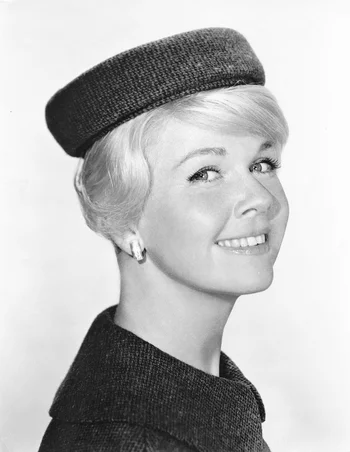
Mary Anderson
April 3, 1918 — Birmingham, Alabama, United States
Mary Anderson was an American actress whose career spanned more than two decades of Hollywood's golden age. Though she appeared in dozens of films and television productions, she is best remembered for two very different roles: a small but memorable supporting part in Gone With the Wind and a lead performance in Alfred Hitchcock's Lifeboat.
Early Life
Mary Bebe Anderson was born on April 3, 1918, in Birmingham, Alabama. Drawn to performing from a young age, she pursued acting training that eventually led her to Hollywood during the height of the studio system era. Like many aspiring actresses of her generation, she benefited from the era's active talent-scouting networks, which routed promising young performers into contracts with major studios. Her early promise caught the attention of producer David O. Selznick's organization, which was then assembling the enormous cast required for its upcoming Civil War epic. This opportunity placed Anderson, still in the early stages of her career, into one of the most anticipated productions in film history and set the stage for a career built on steady supporting and character work throughout the 1940s and 1950s.
Career
Anderson's breakthrough came with a supporting role as Maybelle Merriwether in Gone With the Wind (1939), the sweeping adaptation of Margaret Mitchell's novel that became one of the most celebrated films in American cinema. Though her part was modest in size, appearing in such a landmark production gave her visibility that helped sustain a long career in studio films. Her most substantial role came in 1944, when Alfred Hitchcock cast her as Alice MacKenzie, one of the central survivors in his taut thriller Lifeboat, a film praised for its confined, single-setting storytelling and ensemble performances. Over the course of her career, Anderson appeared in 31 films and 22 television productions between 1939 and 1965, working steadily through the decline of the classic studio era and into the rise of television. Her filmography reflects the versatility expected of contract players at the time, as she moved between dramas, wartime films, and other genre pictures typical of major studio output during the 1940s.
Did You Know?
Mary Anderson played a small supporting role in Gone With the Wind (1939), one of the highest-grossing and most enduring films in American cinema, yet just five years later she landed a lead role in Alfred Hitchcock's Lifeboat (1944), showing the range of parts available to contract actresses during Hollywood's golden age.
Later Life and Legacy
As the studio system gave way to independent production and television became the dominant medium for actors seeking steady work, Anderson transitioned into television productions during the 1950s and continued working until 1965, when she stepped away from screen acting. Anderson lived a long life after leaving the industry, passing away in 2014 at the age of 96. Her legacy endures primarily through the two films for which she is best remembered: Gone With the Wind, whose enduring cultural presence has kept even minor cast members in the historical record, and Lifeboat, which remains a touchstone of Hitchcock's inventive direction. Film historians and classic-movie audiences continue to recognize Anderson as part of the ensemble casts that made these two very different but equally significant films possible, cementing her place in the story of American cinema's golden age.