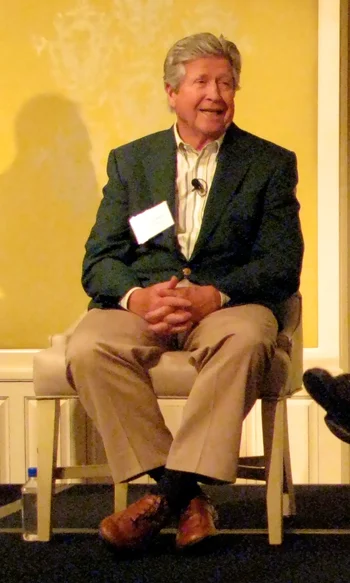
Mikhail Khodorkovsky
June 26, 1963 — Moscow, Russia
Mikhail Borisovich Khodorkovsky is a Russian businessman, opposition activist, and former oligarch who was once considered the richest man in Russia. As head of the oil company Yukos, he amassed enormous wealth during the post-Soviet economic transformation. His arrest in 2003 and ten-year imprisonment on charges widely viewed as politically motivated — a response to his funding of opposition parties and challenge to Vladimir Putin's authority — made him a global symbol of political persecution in Russia.
Rise to Wealth
Born on June 26, 1963, in Moscow, Khodorkovsky showed entrepreneurial instincts from an early age. He studied chemistry at the Mendeleev Institute but pivoted to business during the glasnost era, establishing a bank, Menatep, in 1989. In the chaotic privatization processes of the 1990s, he acquired controlling interests in the oil company Yukos at drastically below-market prices — a process that enriched many of Russia's new oligarchs. By the early 2000s, Yukos was Russia's largest oil company and Khodorkovsky was reportedly the country's richest man, with a net worth estimated at around $15 billion. He began funding civil society organizations and opposition political parties, and reportedly explored a merger between Yukos and Western oil majors.
Arrest, Trial, and Imprisonment
In October 2003, Russian authorities arrested Khodorkovsky at gunpoint at a Siberian airport. He was charged with fraud and tax evasion, tried, and sentenced to eight years in prison in 2005. A second trial in 2010 extended his sentence to 2017. The prosecutions were widely condemned by Western governments, legal experts, and human rights organizations as political in nature — retribution for his funding of Putin's opponents and his own potential political ambitions. Yukos was dismantled and its assets effectively transferred to the state energy company Rosneft. In December 2013, Putin unexpectedly pardoned Khodorkovsky, who was released after serving ten years and immediately left Russia for the West.
Did You Know?
While in prison, Khodorkovsky reportedly refused several opportunities for early release that would have required him to acknowledge guilt or leave Russia — a stance that enhanced his credibility as a principled dissident rather than a pragmatic businessman.
Activism and Legacy
Since his release, Khodorkovsky has lived in exile in London and continued to oppose the Putin government through his Open Russia organization and other initiatives. He has called for regime change in Russia and supported Ukrainian sovereignty during Russia's invasion. His case remains one of the most prominent examples of the use of the Russian legal system against political opponents, and his transformation from oligarch to dissident activist is one of the more unusual political trajectories of the post-Soviet era.