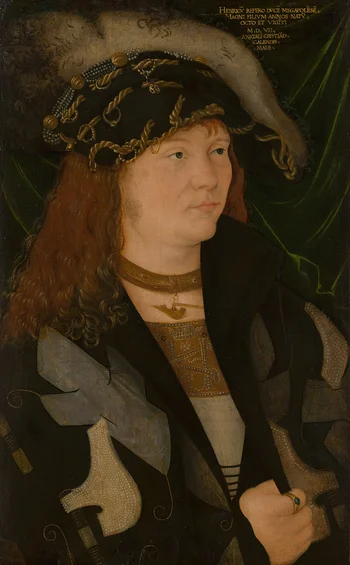
Niccolò Machiavelli
May 3, 1469 — June 21, 1527 — Florence, Italy
Niccolò Machiavelli was a Renaissance diplomat, historian, and political philosopher whose treatise The Prince overturned the idealistic tradition of political writing and laid the groundwork for modern political science. His unflinching analysis of power — divorced from morality — made "Machiavellian" a term still used five centuries later.
Diplomat of the Florentine Republic
Born on May 3, 1469 in Florence, Machiavelli entered the city-state's civil service at thirty and rose to become Secretary of the Second Chancery. For fourteen years he served as Florence's diplomat and military organizer — meeting Cesare Borgia, Pope Julius II, the Holy Roman Emperor, and the French king. He reorganized Florence's defense by creating a citizen militia rather than relying on mercenaries, a practical experiment that informed his later theories. His firsthand observation of how rulers actually acquire and maintain power, stripped of the theoretical virtues prescribed by humanist predecessors, became the raw material for his writings.
The Prince and Realism in Politics
When the Medici restored power in 1512, Machiavelli was dismissed, briefly imprisoned, and tortured on suspicion of conspiracy. Exiled to his estate, he turned to writing. The Prince — dedicated to Lorenzo de' Medici in a bid to win favor — argued that rulers must be willing to use cruelty, deception, and force when circumstances demand. It was a radical departure from the mirror-of-princes tradition that counseled rulers to be virtuous. Equally important was his longer work Discourses on Livy, which advocated republican government and civic virtue. Editions of The Prince remain perennially in print and are read by politicians, executives, and military strategists worldwide.
Did You Know?
During his lifetime, Machiavelli never saw The Prince published. He circulated it in manuscript form hoping for political rehabilitation, but it was not printed until 1532 — five years after his death. The Catholic Church placed it on the Index of Forbidden Books in 1559, a condemnation that ensured its notoriety for centuries.
Legacy
Machiavelli died on June 21, 1527, just weeks after the catastrophic Sack of Rome shattered the Italy he had spent his career trying to analyze and unify. His reputation traveled an unusual arc — condemned as immoral in his own era, revered as a founding father of political science from the Enlightenment onward. From Francis Bacon to Rousseau to Gramsci, thinkers have grappled with his central claim: that understanding politics requires seeing power as it really functions, not as we wish it would. His name adjectivalized into a word — Machiavellian — is itself a testament to his enduring influence.