Otto Bauer
September 5, 1881 — July 4, 1938 — Vienna, Austria
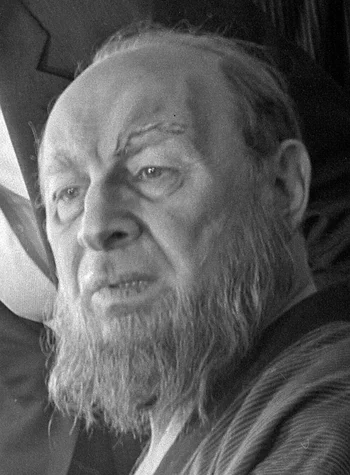
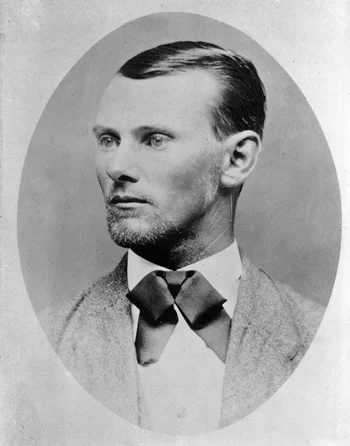
Otto Bauer was an Austrian Marxist politician, theorist, and the dominant figure of the Social Democratic Party of Austria during the interwar period. He was one of the principal architects of Austro-Marxism — a distinctive approach to socialist theory that sought to apply Marxist analysis to the multinational Habsburg context and to navigate a "third way" between reformist social democracy and Bolshevist revolution. His leadership of Austrian Social Democracy during the turbulent years between the wars, and his exile after the fascist suppression of the Austrian left in 1934, made him one of the central figures in European socialist history.
Theoretical Contributions
Born on September 5, 1881, in Vienna to a Jewish middle-class family, Bauer studied law and economics and became active in socialist politics as a young man. His early masterwork, The Question of Nationalities and Social Democracy (1907), was a major contribution to Marxist theory of nationalism, arguing that nations were historically formed communities that deserved recognition and cultural autonomy within a socialist framework — a position that differed markedly from the more centralist positions of both Lenin and the orthodox German Social Democrats. This work established him as one of the most intellectually sophisticated theorists in the Second International and remained influential in discussions of nationalism and socialism well into the twentieth century.
Politics and Defeat
After World War I and the collapse of the Habsburg Empire, Bauer served briefly as Austria's Foreign Minister in the new republic, where he unsuccessfully attempted to negotiate the union of Austria with Germany (Anschluss) on terms favorable to the left. He led the Social Democratic Party through the remarkable social experiment of "Red Vienna" in the 1920s, when the city's socialist municipal government built extensive public housing, welfare services, and cultural institutions. The Social Democrats maintained a form of dual power with the rising Christian Social and fascist movements until February 1934, when Austrian Chancellor Dollfuss launched a military assault on socialist strongholds. After the defeat, Bauer fled into exile and continued his political and theoretical work in Czechoslovakia and later France, where he died in Paris on July 4, 1938.
Did You Know?
The "Red Vienna" experiment of the 1920s, overseen by Bauer's Social Democrats, built over 60,000 public housing units in a decade — creating a model of municipal socialism that was admired by leftists around the world and is still celebrated in Vienna today.
Legacy
Otto Bauer died on July 4, 1938, in Paris, having witnessed the destruction of everything he had built in Austria. He is remembered as one of the most significant Marxist theorists of the twentieth century and as the leader of what was briefly one of the most creative and ambitious socialist experiments in European history. His theoretical work on nationalism and his attempt to chart a democratic socialist path between Leninism and reformism have continued to interest scholars and activists seeking alternatives to both liberal capitalism and authoritarian socialism.