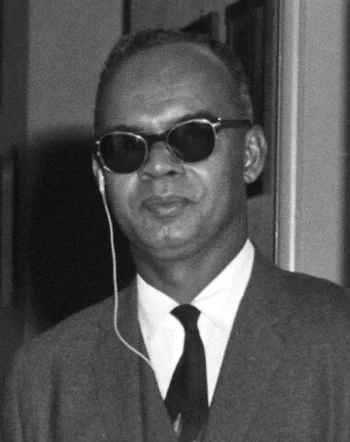
Ralph Jordan
September 25, 1910 — July 17, 1980 — Selma, Alabama, United States
Ralph "Shug" Jordan was an American football and basketball coach best known for leading the Auburn Tigers football program to unprecedented success. Over 25 seasons as Auburn's head football coach, he compiled the winningest record in school history and guided the team to a national championship. His legacy is memorialized in the name of Auburn's home stadium, Jordan-Hare.
Early Life and Multi-Sport Talent
James Ralph Jordan was born on September 25, 1910, and grew up to become a standout multi-sport athlete before transitioning into coaching. He earned the nickname "Shug," a nod to his childhood fondness for sugar, and developed proficiency across football, basketball, and baseball. This broad athletic background gave him a versatile understanding of team sports that would later define his coaching philosophy. Jordan's playing days provided the foundation for a coaching career that would eventually span multiple sports at the collegiate level. His early exposure to different athletic disciplines shaped his approach to player development and game strategy, skills he would apply first as an assistant coach before rising to lead programs of his own. The combination of his playing experience and natural leadership qualities marked him early as a coach with significant potential, setting the stage for a career that would leave a lasting imprint on Southern collegiate athletics.
Building a Coaching Legacy at Auburn and Georgia
Jordan's coaching career took shape across two major Southern universities. From 1946 to 1950, he served as head men's basketball coach at the University of Georgia while also working as an assistant football coach. In 1951, he became head football coach at Auburn University, a position he would hold for 25 years until 1975. During this tenure, Jordan amassed a football record of 176 wins, 83 losses, and 6 ties, the most victories of any coach in Auburn Tigers history. His crowning achievement came in 1957, when his Auburn squad went undefeated at 10–0 and was named national champion by the Associated Press. Jordan also coached Auburn's basketball program simultaneously, compiling a combined college basketball record of 136–103 across his stints at both Georgia and Auburn. His ability to lead both football and basketball programs while maintaining excellence in each demonstrated remarkable versatility and reinforced his reputation as one of the era's most capable coaching figures in Southeastern Conference athletics.
Did You Know?
Ralph Jordan earned the nickname "Shug" as a child because of his love of sugar, and the moniker stuck with him throughout his celebrated coaching career. Remarkably, Auburn renamed its stadium Jordan-Hare in his honor in 1973 while he was still actively coaching the team, two years before his retirement.
Lasting Legacy and Recognition
Jordan's impact on Auburn University proved so profound that in 1973, while he was still coaching, the school renamed its football stadium Jordan-Hare Stadium in his honor, a rare tribute for an active coach. He retired from coaching in 1975 after a quarter-century leading the Auburn football program. Recognition of his contributions to the sport continued after his death in 1980, when he was inducted into the College Football Hall of Fame as a coach in 1982. Today, Jordan-Hare Stadium remains one of college football's iconic venues, hosting Auburn's home games and serving as a constant reminder of his enduring influence. His 1957 national championship team remains a defining moment in Auburn athletics history, and his overall win total still stands as the program's benchmark. Jordan's legacy extends beyond statistics, representing an era when coaches could excel across multiple sports and become woven into the very identity and infrastructure of their universities.