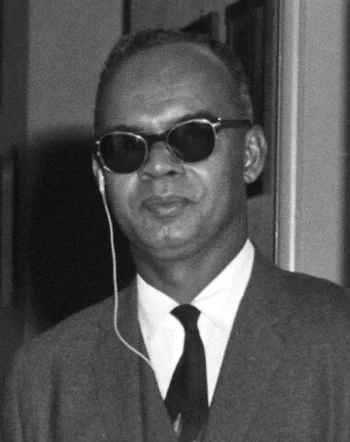
Volfgangs Dārziņš
September 25, 1906 — 1962 — Latvia
Volfgangs Dārziņš was a Latvian composer, pianist, and music critic who helped bring modernist musical currents into Latvia's cultural life during the interwar period. Trained at the Latvian Conservatory, he built a career as both a performer and a sharp-eyed commentator on his country's musical scene. His life, like that of many Latvian artists of his generation, was later reshaped by the upheavals of war and Soviet occupation.
Early Life and Musical Training
Volfgangs Dārziņš was born on September 25, 1906, in Latvia, into a country whose national musical identity was still being forged. He came of age within a family and cultural milieu deeply connected to Latvia's emerging classical music tradition, and he pursued formal training at the Latvian Conservatory in Riga, the leading institution for musical education in the country. There he studied piano and composition, absorbing both the rigorous craft of Central European classical training and the newer currents sweeping through European music in the 1920s. Riga at the time was a lively crossroads of German, Russian, and Baltic cultural influences, and young Latvian musicians of Dārziņš's generation were eager to establish a distinctly national voice while also engaging with international modernism, particularly the harmonic innovations coming out of France. This dual pull—toward homegrown Latvian idioms and toward the impressionist and modernist techniques of composers like Debussy and Ravel—would come to define much of his creative outlook as he moved from student to professional musician in the following decade.
Career as Composer, Pianist, and Critic
As an adult, Dārziņš pursued a three-pronged musical career, working simultaneously as a composer, a concert pianist, and a music critic. As a performer, he brought contemporary and Latvian repertoire to audiences in Riga, helping to popularize newer compositional styles among Latvian listeners. As a composer, he produced piano pieces, songs, and chamber works marked by refined harmonic color and a lyrical sensibility, positioning him among the more progressive voices in Latvian music of the 1930s. Perhaps most distinctively, Dārziņš used his pen as a music critic to shape public and professional conversation about Latvian musical life, offering informed judgments on concerts, compositions, and the broader direction of the nation's musical culture. This combination of creative and critical work gave him an unusually comprehensive influence: he was not only contributing new music to the Latvian repertoire but also actively interpreting and evaluating the work of his contemporaries for the public. His career unfolded during a formative period for independent Latvia's cultural institutions, and his writing and performances contributed to the professionalization of Latvian musical criticism and concert life before the outbreak of the Second World War disrupted the country's cultural institutions.
Did You Know?
Volfgangs Dārziņš belonged to a generation of Latvian musicians who worked simultaneously as performers, composers, and critics—meaning he might premiere his own piano compositions in concert one evening and publish a critical review of a rival composer's work the next day.
War, Exile, and Legacy
The Soviet and German occupations of Latvia during the 1940s upended the cultural world in which Dārziņš had built his career, as they did for countless Latvian artists, writers, and musicians. Like many members of Latvia's cultural elite, he faced the disruption and displacement caused by successive occupations and the eventual reimposition of Soviet control, circumstances that scattered Latvian intellectual and artistic life across new communities in exile. Dārziņš continued to be associated with Latvian musical culture through the difficult years that followed, a period during which many Latvian composers, performers, and critics worked to preserve their national musical heritage outside the homeland. He died in 1962. Today, Dārziņš is remembered as part of a generation of Latvian musicians who bridged the gap between the country's traditional musical roots and the modernist currents of early twentieth-century Europe, and who helped establish serious music criticism as a vital part of Latvia's cultural infrastructure. His combined work as composer, pianist, and critic reflects the versatility demanded of artists in a small nation building its cultural institutions largely from scratch during the interwar years.