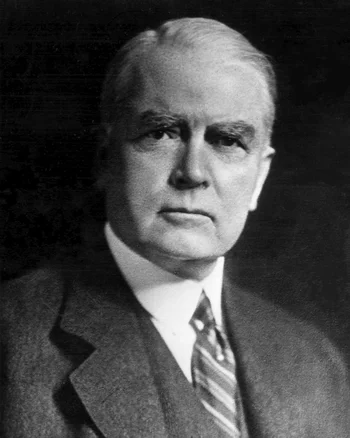
Ralph Waldo Emerson
May 25, 1803 — April 27, 1882 — United States
Ralph Waldo Emerson was the central figure of American transcendentalism — the philosophical and literary movement that shaped American cultural identity more than any other in the nineteenth century. His essays on self-reliance, nature, and the over-soul gave Americans an intellectual language for their democratic idealism, and his lecture circuits made him the most widely heard thinker of his era.
From Minister to Freethinker
Born on May 25, 1803 in Boston, Massachusetts, Emerson came from a long line of Congregationalist ministers and initially followed that path, graduating from Harvard Divinity School in 1826. But his first wife died of tuberculosis in 1831, and the grief sent him into a spiritual crisis that culminated in his resigning from his ministry in 1832, unable to sincerely administer the Lord's Supper. He traveled to Europe and met Coleridge, Wordsworth, and Carlyle — all of whom reinforced his turn toward a more mystical, idealist philosophy rooted in individual experience rather than institutional religion. He returned to Concord, Massachusetts, where he would live for the rest of his life, and began the lecture career that would sustain him.
Self-Reliance and the Over-Soul
Emerson's 1836 pamphlet Nature announced the transcendentalist vision: the natural world as a symbol of spiritual reality, accessible through intuition rather than dogma. His 1841 essay "Self-Reliance" became one of the most influential texts in American history — its injunction to trust one's own instincts and resist conformity struck a democratic nerve that has never gone silent. "A foolish consistency is the hobgoblin of little minds" and "To be great is to be misunderstood" are among the most quoted sentences in the English language. His Concord circle included Henry David Thoreau (whom he mentored), Nathaniel Hawthorne, Louisa May Alcott, and other major figures. His collected essays remain widely assigned in American schools and universities.
Did You Know?
Emerson gave over 1,500 public lectures across the United States over his lifetime — often in small frontier towns far from Boston and New York, making philosophy accessible to ordinary citizens who had never attended a university. He is sometimes credited as the inventor of the American lecture circuit tradition, and his talks regularly drew hundreds of paying audience members in an era before radio or television.
Legacy
In later life Emerson developed increasing memory problems — a condition now speculated to have been early Alzheimer's disease — and his daughter helped him prepare lectures he could no longer remember writing. He died April 27, 1882, in Concord. His influence pervades American intellectual life: Walt Whitman called him his "master" and credited him with setting the seeds for Leaves of Grass; Friedrich Nietzsche was deeply influenced by his individualism; William James and John Dewey developed philosophical pragmatism partly in dialogue with his ideas. The principle of self-reliance he articulated became a fundamental strand of American cultural mythology.