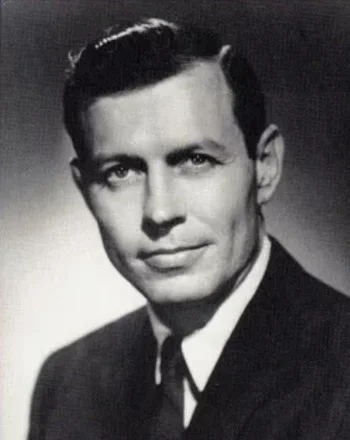
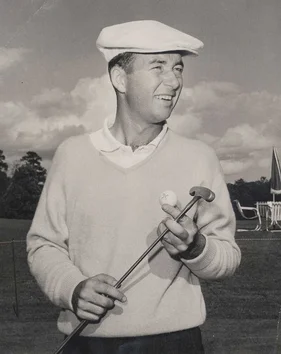
Sigizmund Levanevsky
May 15, 1902 — August 13, 1937 — St. Petersburg, Russia
Sigizmund Aleksandrovich Levanevsky was a Soviet aviator whose daring Arctic flights made him one of the Soviet Union's earliest national heroes. In 1934 he was among the first recipients of the newly created title Hero of the Soviet Union, honored for his role in rescuing survivors of the sunken icebreaker SS Chelyuskin. His career, and his life, ended in mystery in 1937 when his aircraft vanished during an attempted nonstop flight across the North Pole to the United States.
Early Life and Entry into Aviation
Sigizmund Levanevsky was born on May 15, 1902, in St. Petersburg, into a working-class family of Polish descent. Coming of age amid the upheavals of the Russian Revolution and Civil War, he joined the Red Army as a young man before turning his attention to the emerging field of aviation, a discipline the Soviet state was eager to develop for both military and civilian purposes. He trained as a pilot and instructor, eventually gravitating toward naval and polar aviation, fields that demanded exceptional skill given the harsh, unpredictable conditions of Arctic flying. Levanevsky quickly distinguished himself as a capable and daring aviator, willing to undertake missions few others would attempt. By the early 1930s he had built a reputation within Soviet aviation circles as an expert in long-distance and high-risk flights, particularly over the vast, largely uncharted stretches of Siberia and the Arctic Ocean. This grounding in extreme-environment flying positioned him for the historic rescue missions and transpolar attempts that would define the remainder of his career and cement his place in Soviet aviation history.
Arctic Rescues and National Fame
Levanevsky's rise to national prominence began in 1933, when he helped locate and rescue the American aviator James Mattern after Mattern crash-landed in remote Siberia during a solo round-the-world flight attempt. The mission showcased Levanevsky's skill in navigating brutal Arctic terrain and earned him international attention. His greatest fame, however, came in 1934, when the Soviet icebreaker SS Chelyuskin was crushed by pack ice in the Chukchi Sea, stranding more than 100 passengers and crew on the ice. Levanevsky was one of several pilots dispatched to fly perilous rescue missions across the frozen Arctic expanse, ferrying survivors to safety despite dangerous flying conditions and minimal navigational aids. For this heroism, the Soviet government created a new honor, Hero of the Soviet Union, and Levanevsky was named among its first seven recipients in April 1934, alongside other rescue pilots. The award instantly made him one of the most celebrated men in the Soviet Union, a symbol of Soviet technological and human resilience in the unforgiving Arctic.
Did You Know?
Levanevsky was one of only seven people named the very first Heroes of the Soviet Union in April 1934, an honor created specifically to recognize the pilots who rescued the crew of the crushed icebreaker Chelyuskin. Three years later, he vanished without a trace while attempting a nonstop transpolar flight to the United States, and despite extensive international searches, no wreckage of his aircraft or crew was ever found.
The Transpolar Flight and Disappearance
Buoyed by his fame, Levanevsky set his sights on an even more ambitious goal: a nonstop flight from the Soviet Union to the United States over the North Pole. An earlier 1935 attempt was aborted due to an oil leak, but he persisted. On August 12, 1937, Levanevsky and a crew of five departed Moscow aboard a four-engine Bolkhovitinov DB-A aircraft, aiming to cross the pole and land in the United States. Radio contact was maintained until the plane reported engine trouble near the North Pole, after which it vanished without a trace. Extensive Soviet and international search efforts, including expeditions involving American aircraft, failed to find any wreckage or survivors, and Levanevsky was ultimately presumed dead. His disappearance remains one of the enduring unsolved mysteries of early polar aviation. Levanevsky's legacy endures as one of the Soviet Union's original aviation heroes, a symbol of the era's bold, often perilous pursuit of Arctic exploration and long-distance flight, with towns, streets, and even a shoal named in his honor across the former Soviet Union.